

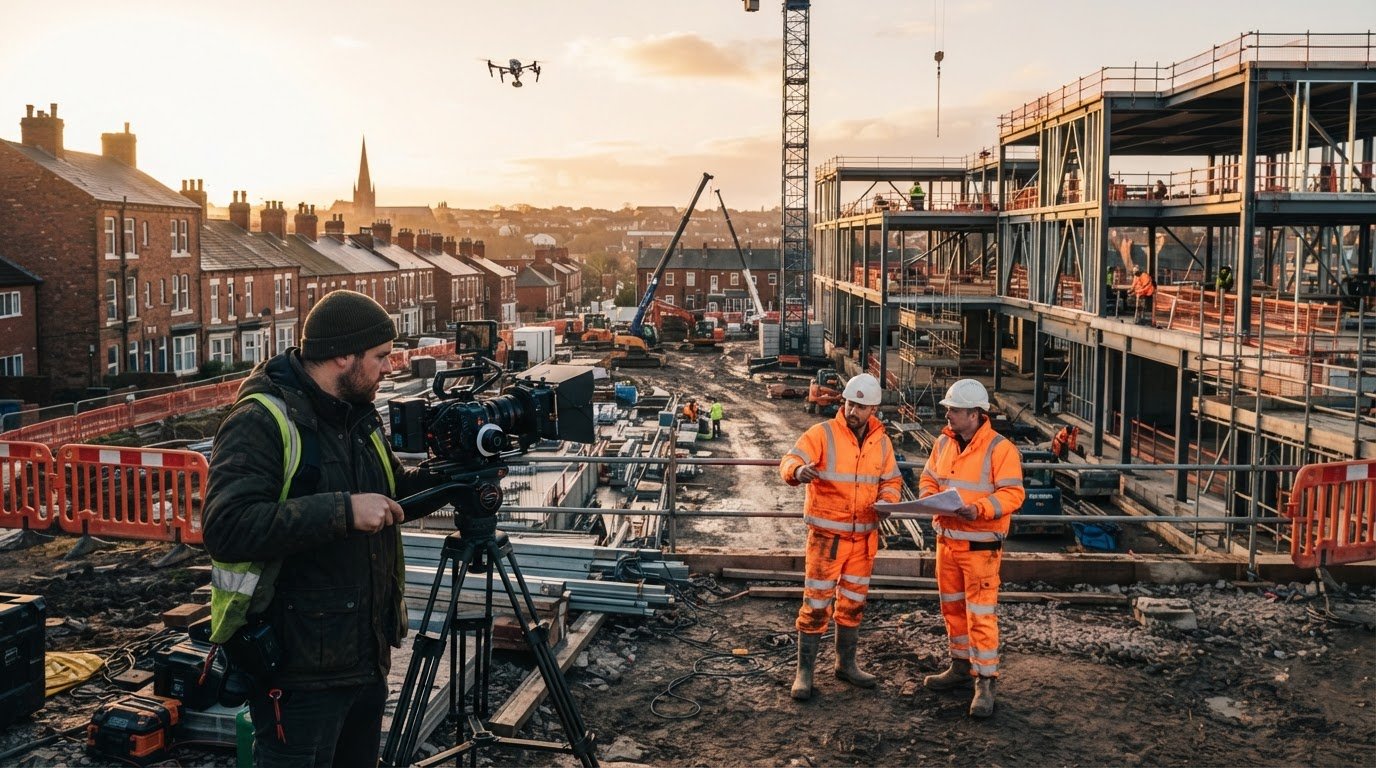
Construction work is easier to understand when people can see it taking shape. Videography for construction projects in Darlington can show progress, explain complex work and give clients, teams and communities a clear view of what’s happening on site. The footage can also support project updates, case studies and marketing.
It’s reasonable to ask whether filming adds practical value when the work itself is the priority. Well-planned video can make information easier to follow, record progress visually and present a finished project in ways still photographs may not. Induction videos can also communicate health and safety information clearly and consistently to new personnel.
This guide explains how construction video production works, what to consider when planning a shoot and how case studies, marketing content, aerial footage and delivery formats can serve different project needs. The scale of the site, its activity and the intended audience all shape the approach, helping you decide which footage will be most useful.
Key Takeaways
- Set a clear purpose for each shoot, such as documenting progress, explaining a project or creating induction material.
- Plan case studies around the challenge, the work completed and the outcome, so viewers can follow the project story.
- Match footage and edits to the audience and channels where you’ll use them, including social media and your website.
- Choose ground-level or aerial footage according to what best shows the site, its progress and the wider context.
- Agree review stages and delivery formats early to make the finished video easier to use across project communications.
Construction project video production
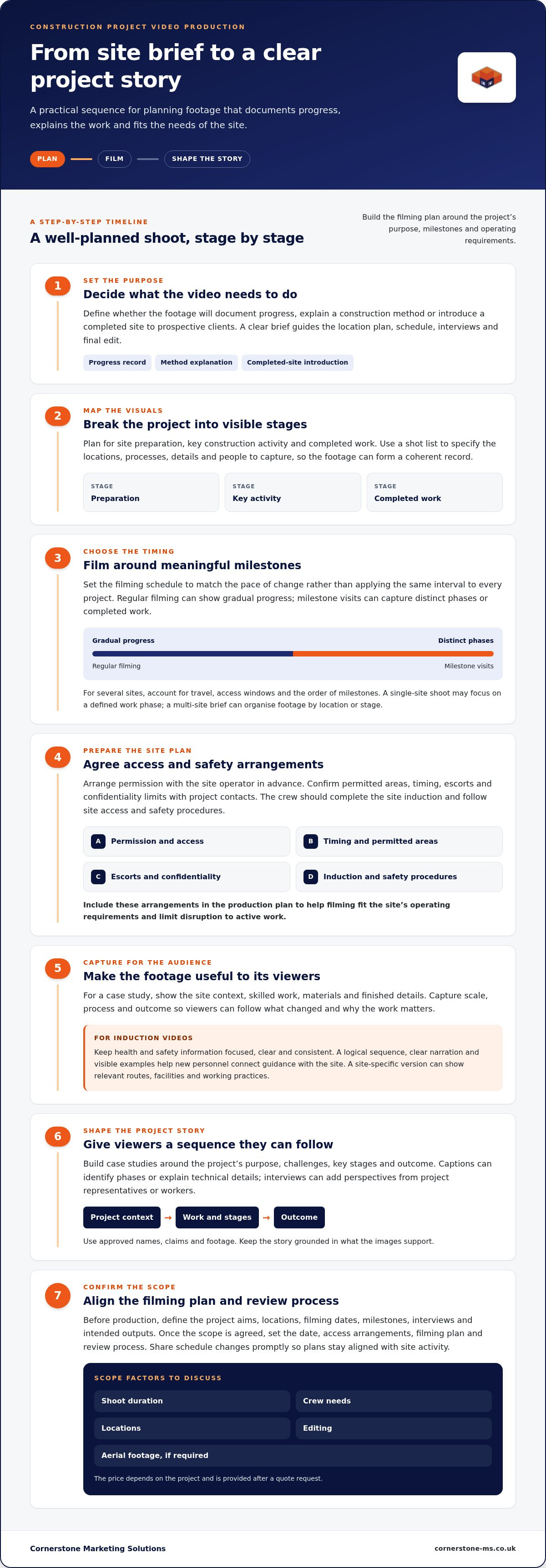
For videography for construction projects in Darlington, start by defining the purpose. A clear brief guides the location plan, schedule, interviews and final edit. It also helps determine whether the video should document progress, explain a construction method or introduce a completed site to prospective clients.
Break the project into visual stages before filming: site preparation, key construction activity and completed work. A shot list can specify locations, processes, details and people to capture. Schedule filming around meaningful milestones so the edit tells a coherent story, and give the site team time to plan access and limit disruption to active work.
Induction video is another practical use. It can present health and safety information clearly, concisely and consistently to new personnel. Keep the content focused on the information they need. Clear narration, visible examples and a logical sequence help viewers connect the guidance with the site. A site-specific version can show relevant routes, facilities and working practices.
For filming on a UK construction site, arrange permission with the site operator in advance. Agree access, permitted areas, timing, escorts and confidentiality limits with the relevant project contacts. The filming crew should complete the site induction and follow site access and safety procedures. Include these arrangements in the production plan so filming fits the site’s operating requirements.
How often should a construction site be filmed for a progress video? Set the schedule around meaningful milestones and the pace of change, rather than using the same interval for every project. Regular filming can show gradual progress, while milestone visits can capture distinct phases or completed work.
Choosing a Darlington Construction Videographer
Choose a videographer whose portfolio explains construction activity, not just showcases attractive images. Look for examples that show scale, process and finished details, then consider whether the framing works for your audience. Discuss the brief, access, schedule, interviews and intended uses before production. For a Darlington project, the plan should account for site layout and active work areas.
Quote and Booking Process
Prepare a brief covering project aims, locations, filming dates, milestones, interviews and intended outputs. The price depends on the project and is provided after a quote request. Factors include shoot duration, crew needs, locations, editing and aerial footage. Once the scope is agreed, set the date, access arrangements, filming plan and review process. Share schedule changes promptly to keep plans aligned with site activity.
Darlington and County Durham Coverage
A brief for videography for construction projects in Darlington and County Durham should identify each site and whether filming covers one location or several. Travel between sites, access windows and the order of milestones can affect the schedule. A single-site shoot might focus on a defined work phase, while a multi-site brief can organise footage by location or stage. Clear planning makes the resulting record easier to review and use.
Construction video case studies and portfolios
A construction case study should show more than a finished building. It can explain the project’s purpose, challenges, key stages and outcome. Footage might move from the site context to skilled work, materials and finished details. This sequence helps viewers understand what changed and why the work matters, rather than having to infer the process from disconnected images.
Examples of construction progress videos in Darlington and Teesside could document a station redevelopment, the visible stages of a commercial build or infrastructure improvements. These details provide a clear basis for explaining the project’s scale and progress.
Build each case study around a story supported by evidence. Start with the location and project context, then show the work in a sequence viewers can follow. Captions can identify phases or explain technical details, while interviews can add perspectives from project representatives or workers. Use approved names, claims and footage to keep the story clear and ensure promotional language matches what the images show.
A portfolio also benefits from showing different kinds of work. A site-progress film can demonstrate change over time; a completed-project case study can focus on design, delivery and the end result. Darlington Station’s redevelopment was due to be completed towards the end of 2025, giving a useful example of how a timeline can frame progress reporting. Present the scheduled completion as part of the project’s chronology, not as proof of its current status.
Local context can make a case study more meaningful. The Stockton and Darlington Railway opened in 1825, and the nationwide 2025 celebration marked 200 years since its opening. A project portfolio can connect contemporary construction with the area’s built environment, where relevant, without implying a direct link to that historic railway. The station redevelopment is also expected to create thousands of job opportunities in Darlington and the wider region, illustrating how a project story may include its broader community context.
For a useful portfolio, group films by project type or purpose, then give each item a concise title and summary. Keep the story grounded in what the footage supports. If you’re shaping a case study for different audiences, visual storytelling can help carry the project narrative across formats.
Construction video marketing
A construction video needs a defined audience and purpose before it becomes a marketing asset. A prospective client may want evidence of workmanship, while a local resident may need a clear explanation of site changes. Choose a primary audience first, then shape the message, filming choices and final edit around what that group needs to understand or do.
For a contractor’s website, a project film can introduce the team’s role, show relevant work and direct visitors to a project enquiry. On LinkedIn, a shorter edit might highlight a technical process or completed milestone. A community update can use plain language and captions to explain an access change. Keep the project facts consistent across versions while adjusting the length and emphasis for each channel.
Plan distribution before filming. This helps the production capture the right material and avoids trying to make one edit serve every purpose. A practical sequence is:
- Set the objective: choose whether the video should explain a service, demonstrate project capability or inform the community.
- Select the audience: define whether the intended viewers are prospective clients, partners, staff or nearby residents.
- Choose the channel: decide whether the main destination is a website page, social post, presentation or email campaign.
- Write the next step: tell viewers where to find project details, read a case study or make an enquiry.
On a website, place the film beside relevant written information so viewers have context. A short introduction can identify the project, location and work shown. Captions help viewers follow key points without sound, while a clear title makes the subject easy to recognise. Keep project claims consistent with approved descriptions and the footage.
Social posts work best when each edit has a specific angle. One post might show a completed detail, while another explains the sequence behind a visible construction stage. Use a concise caption for context, name the project only when approved, and guide viewers to a relevant page. Don’t rely on dramatic footage alone to explain technical work.
Measure usefulness against the original objective. Website visits, enquiries or meaningful engagement can indicate whether the video is reaching its intended audience, but each metric needs context. Judge a community update by how clearly it communicates, not just by reactions. Review audience responses and questions, then use those insights to refine the next video brief.
Post-production feedback and delivery formats
Post-production turns site footage into a clear, usable film. Agree on the intended audience, key messages and delivery channels before the first edit. A project team may need a detailed update, while a public-facing version needs concise explanations. A shared brief gives reviewers a practical basis for assessing the edit.
Set a structured review process so comments improve the film rather than pulling it in different directions. Nominate one person to gather feedback from the project team, communications staff and relevant stakeholders. Ask reviewers to identify the timecode, the issue and the requested change. “At 00:42, add a caption naming the completed work” is more actionable than “make this clearer”.
Review the edit in stages. First, check the story order and whether the footage supports the key claims. Then verify names, captions, terminology, interview quotes and project details. In the final review, assess sound, pacing, spelling and closing information. This sequence helps catch substantive issues before the team focuses on smaller editing details.
- Story review: confirm the opening, project context, main sequence and ending make sense.
- Accuracy review: check people’s names, job titles, locations and descriptions against approved project information.
- Presentation review: assess captions, audio levels, transitions and legibility on the intended screen.
- Release review: confirm the approved edit and intended destinations before publication.
Choose delivery formats based on where the video will appear. An MP4 file is widely used for website and social publishing. A widescreen edit can suit a website page or presentation, while a vertical version may fit a phone-first social post. These are different crops, not simply different file names. Plan framing early so key workers, machinery or site details remain visible in each version.
Captions support viewers watching without sound and can clarify technical terms. Keep each caption brief and synchronised with the spoken content. If an interview uses project-specific language, ask the appropriate reviewer to check its spelling and meaning. A separate caption file can also help when the publishing platform supports it.
Agree how approved files will be labelled and organised. Use descriptive names such as “Darlington-site-progress-approved” rather than “final-final”. Keep the master edit separate from versions prepared for social media or presentations. This reduces confusion when teams share files across project communications.
Before delivery, match each file to its intended use and check playback on a relevant device. The same edit can appear differently on a website, presentation screen or phone. A simple delivery list can record the approved version, format, caption status and destination, giving the project team a clear handover.
Construction project videographers in Darlington, County Durham
For a Darlington construction project, the right filming approach depends on the site, audience and intended use. A compact refurbishment needs different coverage from a large infrastructure programme. Decide what viewers should understand, such as the work sequence, project setting or finished details. That brief provides a practical starting point for the filming plan.
Assess portfolio examples by how clearly they explain construction activity. A useful example might show groundworks, façade installation and the finished entrance, with enough context to connect each shot. Consider whether the framing makes scale and progress easy to understand. Strong visuals should support the project story, not distract from it with decorative shots.
For work in Darlington and County Durham, map locations and access needs before setting a filming schedule. A single site can be planned around active work areas; a project across several locations may need a sequence that reduces unnecessary travel. Identify key milestones, suitable filming windows and people who can explain the work. These details help shape a realistic brief.
Use a short selection framework to compare the proposed approach with your project requirements:
- Purpose: identify whether the film is for project updates, a case study, recruitment or public information.
- Coverage: list the processes, locations, people and finished details the footage needs to show.
- Access: set out site entry arrangements, induction requirements and any areas excluded from filming.
- Outputs: define the intended audiences and formats, such as a website film and shorter social edits.
Include aerial footage only when an overhead view adds useful context. It can help explain a site layout, surrounding access or changes across a wider area. Ground-level footage is still important for showing workmanship, materials and conversations. Combining perspectives can give viewers a fuller understanding when each shot serves a clear purpose.
Clear communication matters when a project involves several stakeholders. Agree who approves site access, supplies accurate project details and reviews the final edit. A named point of contact can consolidate feedback and keep decisions consistent. For example, the project manager can validate construction terminology while the communications lead checks wording for the intended audience.
A well-defined brief brings the filming plan, site arrangements and final use into one workable sequence. If you’re ready to shape a project brief, discuss your construction video requirements.
Cornerstone Marketing Solutions: Social Media Management
Cornerstone Marketing Solutions helps construction businesses turn project footage into clear, consistent social media content. Its Social Media Management service supports businesses looking for a considered way to share updates, project stories and completed work with their audiences.
When a project needs fresh footage, Cornerstone Marketing Solutions’ Videography service can capture the work, while Drone Videography can provide aerial perspectives that suit the brief. Social media content can then be planned around the project’s purpose and audience. This is a practical next step if your team has useful construction footage but needs support presenting it online, or is planning a project film alongside ongoing social updates.
Contact Cornerstone Marketing Solutions to discuss social media management or construction videography for your project.
Give your next project a clear visual direction
Choose an upcoming project and decide what you want its audience to understand. That decision can shape a practical brief for videography for construction projects in Darlington, from the intended message to where the finished content will appear. A defined starting point connects filming with the wider way your business communicates.
Cornerstone Marketing Solutions supports this work through Videography, Social Media Management and Web Design. These services can bring project footage into a wider digital presence, whether you’re preparing a project story, planning ongoing social content or improving how visitors encounter your work online.
Set out your project aims and the audience you want to reach, then discuss your construction video plans with Cornerstone Marketing Solutions. A clear brief is a sound first step towards presenting your work with purpose.
Frequently Asked Questions
Why use video?
Video helps people understand construction work that’s difficult to explain in a short written update. A site manager could use a recorded walkthrough to show how a completed area connects with the next phase, while a client presentation could demonstrate details that plans alone don’t make tangible. Footage can also give your team reusable material for explaining project decisions to different audiences. Choose footage that answers a real viewer question.
Why work with a construction video specialist?
A construction-focused videographer can plan shots around active work, site access and the processes viewers need to see. For example, filming a sequence from material delivery to installation can make a method easier to follow than a set of isolated close-ups. Include project terminology and the intended audience in your brief. That context helps make the footage clear without losing technical meaning.
Are construction site filming and drone video services available in Darlington?
Cornerstone Marketing Solutions provides construction videography and drone videography for projects in Darlington and the North East. Ground-level filming can show site details, while aerial footage can help communicate the layout of a larger site. The right approach depends on the story you need to tell. Plan access and filming areas with the project team, and ensure drone use fits the site’s arrangements.
What can UK construction project video packages and deliverables include?
Deliverables should match how your team will use the finished content. Your brief might request a main project film for a website, a shorter edit for social media or a captioned version. Specify the intended channels, orientation and project branding before editing begins. Cornerstone Marketing Solutions provides Videography, with the production scope shaped around your brief and intended use.