

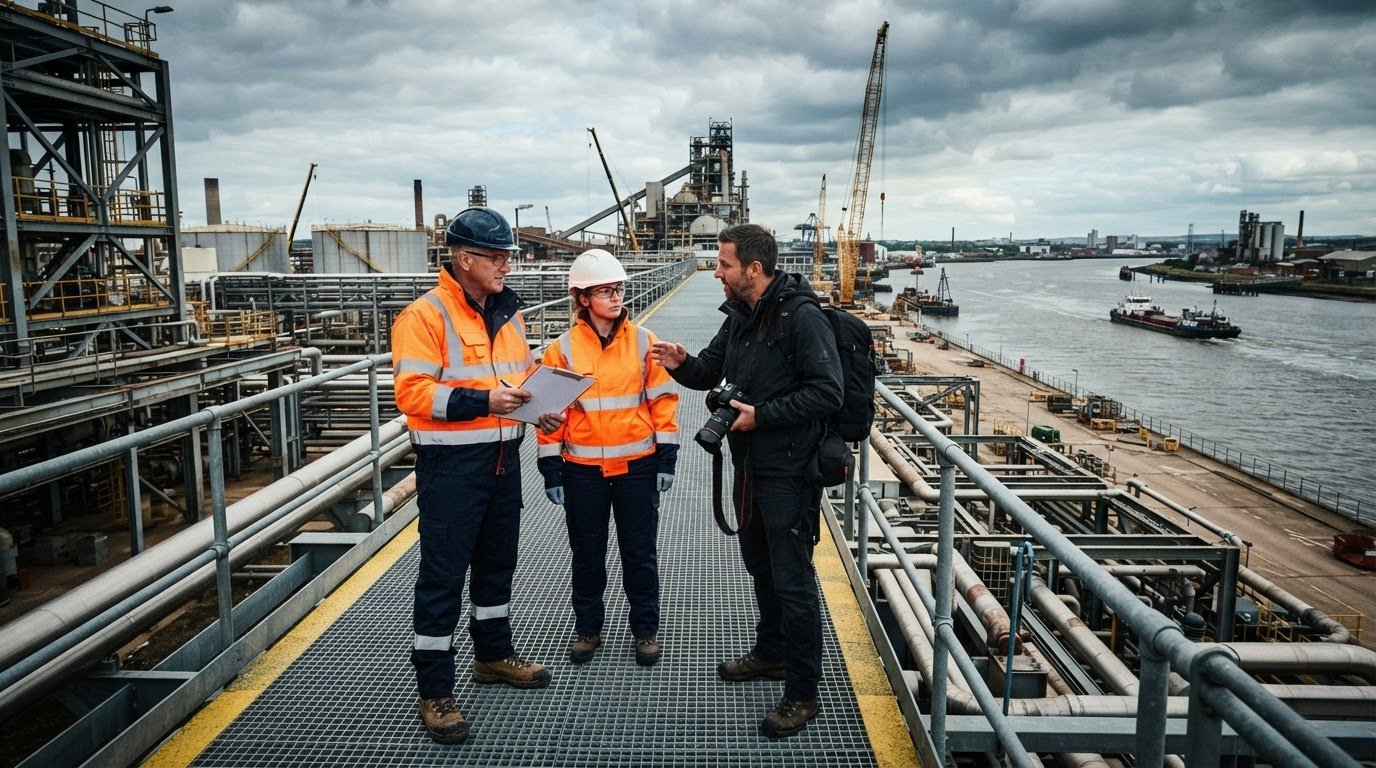
What makes an industrial photograph useful is not simply how polished the site looks, but how clearly the image shows what happens there. If you’re searching for “commercial photography for industrial sites stockton-on-tees”, plan for imagery that reflects your real operations without getting in the way of them. That means accounting for site access, safety procedures, people and processes, not just turning up with a camera.
You may want one set of images to support recruitment, sales, your website and stakeholder communications. A clear, site-first brief helps by identifying the priorities, practical constraints and intended uses for each image. This guide explains what to include in a shoot brief, how to prepare a site and how to choose images that support your business goals. It also covers how photography can work alongside video, drone footage and wider marketing activity. Based in Stockton-on-Tees, Cornerstone Marketing Solutions provides photography and coordinated visual content for businesses across the Tees Valley and wider North East.
Key Takeaways
- A site-first brief aligns the shoot with operational priorities, access requirements and the story your business needs to communicate.
- Match each image to an audience and purpose, from establishing views and equipment details to staff, processes and finished work.
- When comparing options for commercial photography for industrial sites stockton-on-tees, assess the brief, relevant understanding, deliverables and communication.
- Prepare in a clear sequence: set objectives, coordinate with site staff and follow the operator’s access, induction and safety procedures.
- Plan photography alongside videography and drone videography when you need visual assets for your website, social content or wider campaigns.
Why industrial-site photography in Stockton-on-Tees needs a site-first brief
An industrial site has operational priorities as well as visual stories. Production schedules, safe access and staff activity should shape the photography plan from the outset. A site-first brief starts with those realities, then identifies which images will explain what the business does and why its facilities, people and processes matter.
This is different from a standard corporate portrait or product shoot. A portrait session might use a controlled backdrop, while product photography isolates an item for close inspection. On an active site, the setting is part of the story: equipment, working environments and the connection between people and processes can all help show capability. For businesses in Stockton-on-Tees and the Tees Valley, local industrial context can inform the visual approach, but the images should reflect the specific business and operation being photographed. The Industrial history of Stockton-on-Tees offers useful background for understanding the area.
What commercial industrial photography can show
Choose image types according to what they need to communicate. A useful brief connects each subject to an audience and purpose, rather than requesting a general collection of attractive shots.
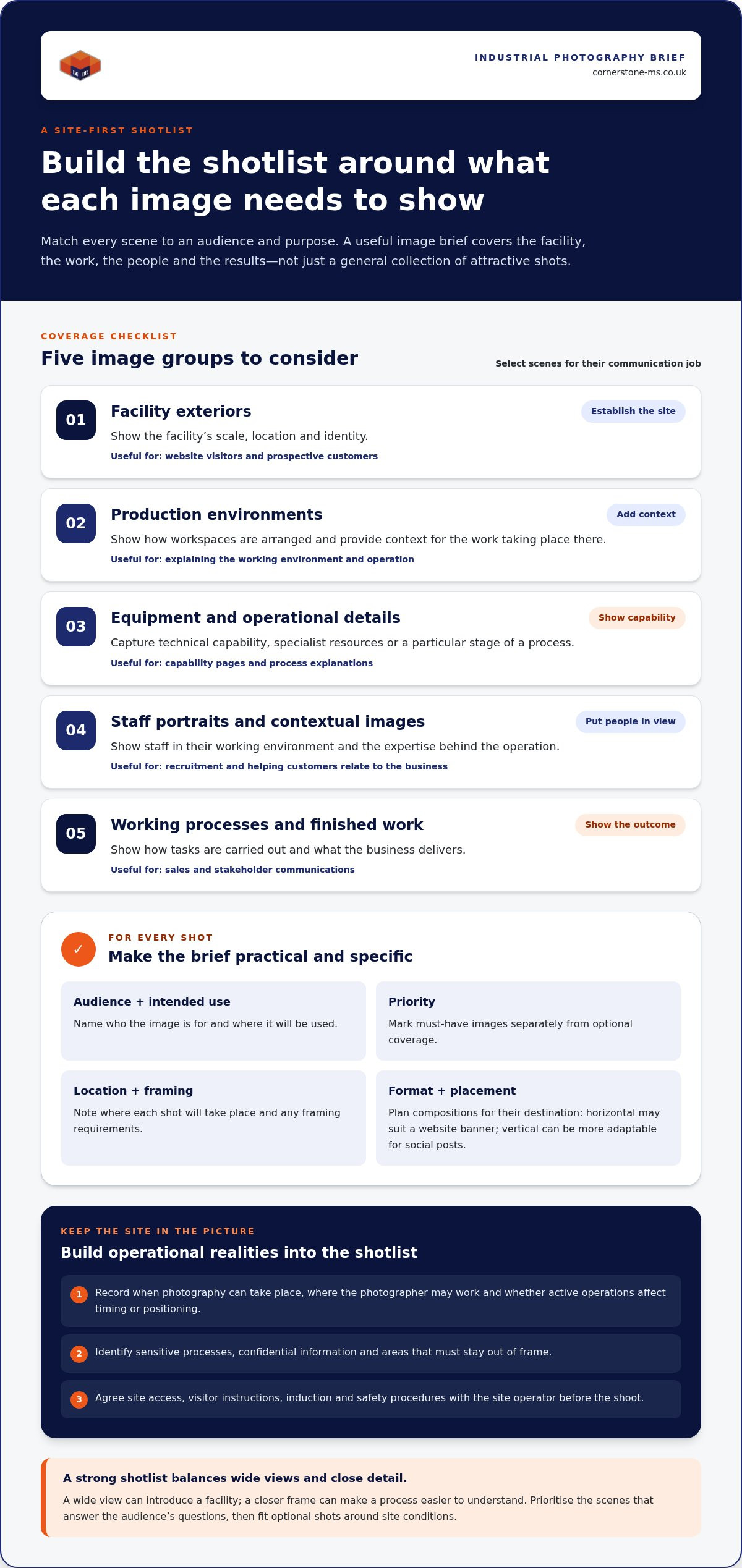
- Facility exteriors: Establish the site’s scale, location and identity for website visitors or prospective customers.
- Production environments: Show how workspaces are arranged and provide context for the work that takes place there.
- Equipment and operational details: Illustrate technical capability, specialist resources or a particular stage of a process.
- Staff portraits and contextual images: Put people at the centre of the business, supporting recruitment and showing customers the expertise behind the operation.
- Working processes and finished work: Show how tasks are carried out and what the business delivers, giving sales and stakeholder communications relevant visual evidence.
These image types can work together, but they do different jobs. A wide view can introduce a facility, while a closer frame can make a process easier to understand. Naming the audience and intended use helps you prioritise the right scenes.
Why operational context changes the brief
Industrial environments may have changing schedules, restricted areas and designated access routes. Record when photography can take place, where the photographer may work and whether active operations affect timing or positioning. This keeps the shoot focused and considerate of staff and site activity.
Identify sensitive processes, confidential information and areas that must stay out of frame. Include site-specific instructions, such as how visitors should access the location and which induction and safety procedures apply. Agree these details with the site operator before the shoot to reduce avoidable delays and prevent unusable images. A clear plan gives the photographer direction while respecting how the site operates.
What images should an industrial-site photography brief include?
Start your shotlist with the job each image needs to do. Before the shoot, map the image type, intended audience and intended use in a simple table. This makes the brief practical and separates essential coverage from optional shots that can be fitted in if site conditions allow.
For example, list a wide facility view for prospective customers visiting your website, an equipment detail for a capability page and a staff image for recruitment communications. Add each shot’s priority, location and any framing requirements. This shared reference helps the team keep coverage consistent across pages and campaigns.
- Establishing views: Show the facility exterior or a broad production environment to introduce the site and its scale.
- Operational details: Capture process stages or close views of equipment to explain how work is carried out.
- People at work: Photograph staff in their working environment to support recruitment and make technical services more relatable.
- Finished work: Photograph completed products, components or outputs to show what the operation delivers.
Mark must-have images clearly. Optional coverage could include alternative viewpoints or additional details that would be useful but are not essential to the main communication goal. A ranked list helps keep the shoot on track if access or operating conditions limit the time available in a particular area.
Choosing images for different industrial audiences
Prospective customers and procurement stakeholders may need facility and process views that make your capabilities easier to understand. Recruitment content benefits from genuine staff portraits and workplace context. For stakeholder updates, choose relevant images of operations without revealing sensitive details. Define the audience first, then select the images that answer their likely questions.
Planning photography for digital channels
List the website pages, social platforms and campaign placements that will use the images. A horizontal composition may suit a website banner, while vertical framing can be more adaptable for social posts. Detail shots also add variety to page layouts and supporting content. Planning formats in advance helps you build a useful, consistent library rather than a collection of images without a clear destination.
Connect the shotlist to your wider content plan. If images will support scheduled social posts, align their subjects and formats with the social media management guide for Teesside businesses. For additional ideas on presenting industrial work, industry safety and visual techniques standards offer further guidance. A purposeful plan makes commercial photography for industrial sites stockton-on-tees more useful across channels. Cornerstone Marketing Solutions can help plan industrial photography around your marketing goals, keeping the audience and intended use central to the brief.
How to compare industrial photography options for your Stockton-on-Tees site
A useful comparison looks beyond a list of services. For commercial photography for industrial sites stockton-on-tees, consider whether the plan fits your operation, audiences and image requirements. A generic offer of portraits, products and events does not explain how a shoot will account for site priorities. A tailored approach connects the creative work to the practical conditions at your location.
Use four points to assess the fit:
- Brief quality: Does planning start with your objectives, audiences, site priorities and intended image uses?
- Relevant understanding: Does the plan account for operational context, controlled access and sensitive areas, rather than treating the site like a standard office?
- Deliverables: Are the expected image formats, editing, usage and delivery requirements clearly set out?
- Communication: Is there a practical way to coordinate with the site team and respond if access or operating conditions change?
Preparation helps people understand which areas are involved, what the shoot needs to capture and how the site team will stay informed. It cannot prevent every change in a live operation, but clear priorities and coordination help keep decisions focused when plans need to adapt.
Assessing the brief, planning, and communication
At Cornerstone Marketing Solutions, we keep the brief centred on your business objective and the realities of the site. A clear shotlist gives the creative team and site representatives a shared reference for priorities, access and timing. Agreeing on a site contact and a straightforward way to share updates also helps everyone respond if an area becomes unavailable or operations shift during the shoot.
This kind of planning connects each image to a purpose while giving the site team a clear view of what to expect. As a Stockton-on-Tees-based agency serving the Tees Valley and wider North East, Cornerstone creates visual content around local businesses’ marketing needs without losing sight of the operational brief.
Understanding editing and final image use
Set out what you need to receive and how you intend to use it. The brief can specify suitable formats for website pages, social content or campaign materials, along with delivery requirements and usage rights. Clarifying where and for how long images may be used helps align expectations before the work begins.
Editing should make the final set consistent and suitable for its intended channels while representing the site and its work accurately. Consistent choices in colour, framing and visual tone help images sit naturally alongside other brand materials. Connecting photography decisions with a wider branding strategy for North East businesses can support a coherent presentation across your website and campaigns.
How to prepare an industrial site for a photography shoot
A practical shoot plan begins well before the photographer arrives. Work through objectives, permissions, access, people and timing in sequence, so the images can be captured without losing sight of site priorities. For commercial photography for industrial sites stockton-on-tees, preparation should reflect the specific operation, not assumptions about how a site works.
Before the shoot: agree access and priorities
Start with the site operator or designated representative. Confirm which areas are approved for photography, how the photographer should enter and move around the site, and whether an induction or other site-specific arrangements are required. Agree who will be the main contact on the day and how they can be reached if plans change.
Next, identify boundaries. Note restricted zones, sensitive processes, confidential information, equipment or screens that must not appear, and areas where photography is unsuitable. Include these exclusions in the shoot plan so the creative team can work within them. If staff, customers or visitors may be identifiable, establish the site’s expectations for photography and permissions in advance.
Then agree priorities with the people responsible for operations. Rank the essential shots and match them to locations and suitable operating periods. For example, if a process image depends on a particular machine being in use, plan around the team responsible for that activity rather than interrupting their work. Build a realistic schedule that allows time to move between approved areas and adapt to changes in site activity.
- Access: Approved entry, routes and areas, plus any induction arrangements.
- Boundaries: Restricted locations, sensitive information and subjects to exclude.
- Coordination: Site contact, priority shots and timing agreed with operational teams.
- People and spaces: Staff involved in photographs, areas to prepare and local instructions to follow.
Preparation does not mean staging every part of a working environment. Tidy only what is appropriate, make sure planned spaces are accessible and let staff know what the shoot involves. Keep the plan proportionate by prioritising the images that support the business objective rather than trying to cover every room or process.
On the day: keep the shoot coordinated
Follow the site operator’s access, induction and safety procedures throughout the shoot. The photographer should take direction from the site contact about where to go and when it is appropriate to work. Do not enter restricted areas or change the agreed plan without approval.
Coordinate each shot around people, machinery and operational activity. If a planned scene would interfere with work, pause and let the site contact advise on the next suitable opportunity. The site contact can communicate changes that affect access or timing, while the creative team updates the shotlist and moves to another approved priority where practical.
Keep communication direct and priorities visible. A short check-in with the site contact as the shoot progresses can confirm what is complete and what remains, without adding unnecessary demands on operational staff. This steady coordination helps the team capture useful images while respecting how the site needs to run.
Cornerstone Marketing Solutions plans industrial photography around your site priorities, connecting the visual brief to your wider marketing needs.
How Cornerstone can connect industrial photography with wider marketing
Industrial photography is more useful when it is planned around the work your marketing needs to do. A set of images could introduce your facilities on your website, show a process to prospective customers and give recruitment or stakeholder communications a clearer view of the people behind the operation. Cornerstone Marketing Solutions, based in Stockton-on-Tees and serving the Tees Valley and wider North East, plans photography around each project’s priorities and intended use.
Photography can also sit alongside videography and drone videography when those formats support the brief. Still images provide flexible content for web pages and social posts, while video can show movement, sequence or a broader sense of how a site operates. The right mix depends on your objectives, audience and practical site constraints, not on adding formats for their own sake.
Building a usable visual-content library
A planned shoot can bring together complementary facility, process and people-focused content. For example, exterior and interior images may introduce the site, process details can explain capability, and staff-focused images can support employer communications. Together, these assets help different parts of your marketing tell a consistent story.
Decide where each image could be used before the shoot. Website pages may need adaptable compositions and images that fit naturally within a layout. Considering image needs alongside web design in the North East can help align visual content with page structure and purpose. A coordinated library can also support social content and campaign materials, with selections tailored to each channel rather than reused without context.
Taking the next step with a clear project brief
Start with the essentials: what the site needs to communicate, who the imagery is for, where it will appear and which practical constraints could shape the shoot. Note priority areas, access arrangements, subjects to exclude and whether you’re considering still photography, video or drone footage. This gives the creative planning a solid foundation and keeps the work aligned with site operations.
Cornerstone tailors the creative approach to the project, connecting visual content with wider marketing needs while keeping the site brief central. If you’re planning commercial photography for industrial sites stockton-on-tees, outline your objectives and intended image uses to give the project a clear starting point.
Discuss your industrial photography brief with Cornerstone and plan visual content around your Stockton-on-Tees site and business goals.
Give your next visual project a clear direction
Begin by identifying the communication need that matters most. Perhaps a website page needs to explain your capabilities more clearly, or recruitment content should give people a better sense of the workplace. Let that priority guide the images you plan to create and how you will use them. A focused brief gives the shoot a purpose beyond simply updating your image library.
For commercial photography for industrial sites stockton-on-tees, Cornerstone can bring photography together with videography and drone videography, shaped around your site and marketing objectives. Based in Stockton-on-Tees and serving the Tees Valley and wider North East, the team connects visual content to the audiences you need to reach.
Discuss your industrial photography project with Cornerstone to plan visual content that reflects your business with clarity and care.
Frequently Asked Questions
What does commercial industrial-site photography include?
Commercial industrial-site photography can cover buildings, machinery, workspaces, products and the people who keep operations running. The right mix depends on what your business needs to communicate. For example, a supplier might prioritise images that show production capability, while a company recruiting specialist staff may need photographs that give candidates a genuine sense of the workplace. A focused selection makes each image more useful to its intended audience.
How should I prepare an industrial site for a photography shoot?
Make sure everyone involved knows what will happen and which areas are in scope. Share the agreed schedule with relevant teams, identify who can approve access and flag any areas or information that must stay out of photographs. If staff will be featured, let them know what the images are for and how they may be used. Follow the site operator’s procedures throughout.
Can photography take place while an industrial site is operating?
A shoot can be planned around active operations when the site operator approves the arrangements and directs access. Timing may depend on what is happening on the day, so a flexible shot order can help. For instance, the team could photograph an approved office or exterior area while a production space is busy, then return to a priority scene when conditions allow.
What should an industrial photography brief include?
Include the business objective, intended audience, image uses, priority subjects and practical site constraints. Note access arrangements, the site contact, induction expectations, restricted areas and sensitive information to exclude. It is also useful to describe the final assets you need, such as images for a website page, recruitment material or a customer presentation. Businesses searching for “commercial photography for industrial sites stockton-on-tees” can use these points to shape a brief around their operation.
Can industrial photography be used for recruitment and marketing?
Yes. Images can support recruitment by showing the working environment and the people behind the business. Marketing content can help explain services, facilities or production capability to prospective customers. Let the intended use guide what is captured and how people are represented. A recruitment page, for example, may need approachable workplace portraits, while a capability page may call for clear views of specialist processes or equipment.
Do industrial photography shoots include aerial images?
Aerial coverage can add context by showing a site’s layout and surroundings. Cornerstone Marketing Solutions offers drone videography, which can provide moving aerial footage as part of a coordinated visual-content plan. Aerial video and still photography are different deliverables, so state which format you need and how you will use it. Plan any drone work around site access and operating conditions.
How can I use industrial photographs across my website and social media?
Choose images to suit each placement instead of using the same crop everywhere. A website service page might need a wide composition, while a social post could focus on a staff member, a piece of equipment or one stage of work. Keep a record of each asset’s subject and approved use so colleagues can select appropriate images for future posts, recruitment updates and campaign content.