

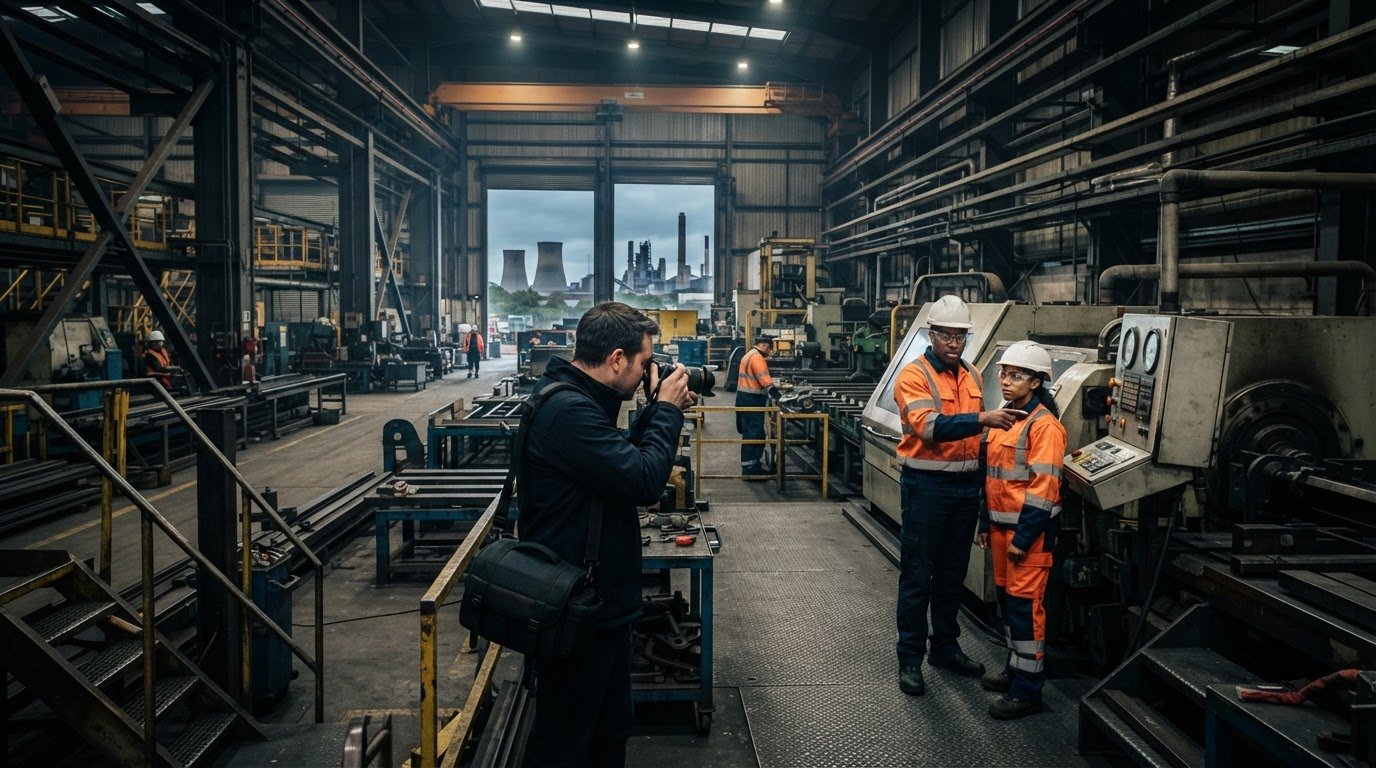
What if the most useful industrial photographs aren’t the most polished ones, but the ones that show buyers how your operation really works? Choosing marketing photography for industrial businesses teesside means looking beyond a single impressive shot. Existing images may not show the scale of your site, the people behind the work or the standards you’re proud of. A well-planned shoot can fill those gaps while taking production schedules and site procedures into account.
You need images that build confidence and give your marketing team practical assets, not a folder of photographs with no clear purpose. This guide explains how to brief a photographer for an industrial environment, plan around access and operational needs, and select images for your website, social media and other marketing channels. It also covers how to assess a photographer’s suitability and compare value beyond the day rate. Based in Stockton-on-Tees, Cornerstone Marketing Solutions provides photography alongside services such as web design, social media management and SEO, helping businesses connect imagery with wider marketing activity.
Key Takeaways
- Plan photography around the people, processes, facilities and finished work buyers need to understand.
- Match each image type to its audience and intended use, from website pages to social posts and sales materials.
- Compare providers by their fit for your site, planning process, deliverables and communication, not just by day rate.
- A clear brief and site preparation can help limit disruption and reduce the risk of receiving images your team won’t use.
- Choose marketing photography for industrial businesses teesside that supports your wider website, social media and search marketing plans.
Why marketing photography matters for industrial businesses in Teesside
Industrial buyers often need to understand what a supplier can do before arranging a site visit or starting a detailed conversation. Clear, credible photographs help make that capability visible. They can show the scale of a facility, the condition of equipment, how a team works and what a finished product looks like. For businesses with complex processes, these details give prospective customers a more useful first impression than generic stock imagery or photographs that no longer reflect current operations.
Industrial marketing photography is planned imagery that communicates a business’s people, capabilities and working environment to customers and other stakeholders. It applies the art and application of photography to a practical business purpose: helping viewers understand an operation and supporting informed buying decisions. Unlike routine record-keeping or technical documentation, a marketing shoot selects and frames subjects to answer buyer questions while remaining faithful to the work as it happens.
What industrial marketing photography can show
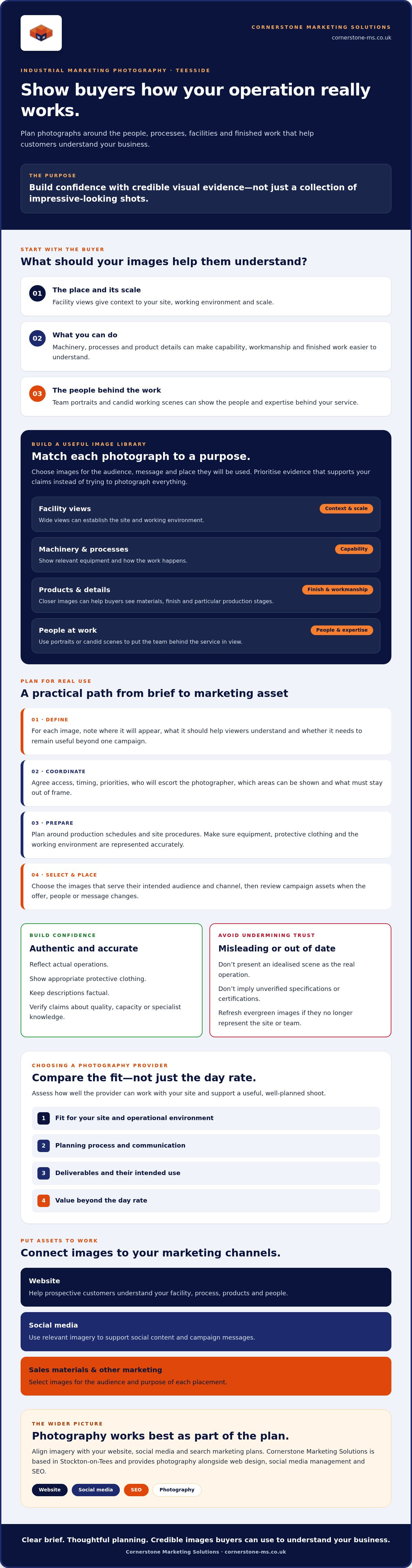
Start with what a potential buyer needs to assess. Facility images can give context to your scale and working environment. Machinery and process photographs can help explain capability, while product images can clarify finish and detail. Team portraits or candid working scenes can show the people and expertise behind the service. Prioritise evidence that supports your claims about quality, capacity or specialist knowledge instead of trying to photograph everything.
Authenticity matters. Images should reflect actual operations, with accurate equipment, appropriate protective clothing and a realistic view of the workplace. A carefully composed photograph can still be honest. An idealised scene that misrepresents the site or process may undermine confidence if it doesn’t match a buyer’s later experience.
Why local context matters when commissioning a Teesside shoot
Teesside’s industrial landscape includes clean energy, advanced manufacturing and logistics, so the operational setting and buyer questions can vary widely. Before naming a sector in your brief, make sure it genuinely reflects your business and the work you want to show. A locally coordinated supplier may make communication and planning simpler, particularly when your site team, marketing colleagues and decision-makers need to agree access, timing and priorities.
For marketing photography for industrial businesses teesside, local knowledge is most useful when it supports practical coordination, not as a substitute for understanding your operation. Agree who will escort the photographer, which areas can be shown and what must remain out of frame. That preparation helps protect operational needs while producing images that give buyers a clear, credible view of your business.
Which industrial photography assets will support your marketing?
Choose photography by starting with the audience you need to reach and the purpose each image must serve. That keeps a shoot focused on usable assets rather than a large collection with no clear role. For each image, note where it will appear, what it should help a viewer understand and whether it needs to remain useful beyond a single campaign.
A balanced library can combine evergreen brand photography, such as facilities and team portraits, with campaign-specific images for a product launch, recruitment push or event. Review campaign assets when the offer, people or message changes. Evergreen images may last longer, but refresh them if they no longer represent the site or team accurately. Teesside’s industrial identity has a long visual history, explored by Art UK’s account of Teesside’s industrial heritage. Contemporary business imagery should show your own operation rather than rely on regional imagery alone.
Facility, product and process photography
Wide facility views can establish scale and working context, while closer process and product photographs help explain what your business does. Detail shots may be useful when buyers need to see materials, workmanship or a particular stage of production. In the brief and captions, identify what each image shows and keep descriptions factual. An image can illustrate capability, but shouldn’t imply a specification, certification or output you haven’t verified.
| Image type | Intended audience | Likely channel | Brief considerations |
|---|---|---|---|
| Facility views | Prospective customers and partners | Website, sales materials | Show context and scale; confirm areas that can be photographed. |
| Products and details | Technical and procurement teams | Product pages, proposals | Identify which features or finishes need to be clear. |
| Processes and machinery | Buyers assessing capability | Website, LinkedIn | Coordinate timing around safe, representative work. |
| Team portraits | Customers, candidates and partners | About pages, social posts | Agree who to feature and the tone of the images. |
Team portraits and images for digital channels
Authentic staff portraits can make a technical business more approachable by showing the people responsible for its work. Candid images may suit a workplace story, while consistent portraits can help introduce key contacts. Plan crops and orientations for the actual placements, including website banners, profile images and LinkedIn posts. A conversation about social media management in Teesside can help align photography with a publishing plan. If you’re mapping images to broader marketing needs, explore photography and wider marketing services from Cornerstone Marketing Solutions.
How to compare industrial photography providers in Teesside
The right provider should understand both the images you need and the conditions they’ll be working in. For an active industrial site, discuss access, safe working arrangements, production schedules and internal approvals before agreeing a shoot plan. A clear brief can help reduce disruption and avoid paying for images that don’t suit your channels or answer buyers’ questions.
Compare complete proposals rather than assuming a lower price or a higher image count represents better value. Check whether the proposal includes planning, time on site, image selection, editing, delivery formats and usage rights. Clarify exclusions and how additional requests would be handled. Photography’s role in marketing is also discussed by the Florida Museum of Photographic Arts in its article on the heart of modern marketing, but your assessment should focus on how a provider’s approach fits your business objectives.
Questions to ask before choosing a photographer
Ask to see examples relevant to your setting and the type of work you want to show. Confirm who will plan the shoot, how image selection and editing work, what file formats you’ll receive, how you can use the images and what falls outside the proposal. Discuss what happens if site access changes, weather affects outdoor work or production schedules shift. Ask how the photographer will coordinate with your site contact and respond to feedback from stakeholders.
Before booking, ask: Can this provider work within our site procedures, create the assets we need, explain exactly what’s included and communicate clearly if plans change?
How to assess creative and commercial fit
A strong creative fit starts with understanding the intended audience and the action you want them to take, such as enquiring about a capability or reviewing a product range. Look for consistent image quality and a practical process for gathering feedback, especially if marketing, sales and operations teams all need to review the work. Visual consistency matters across photography and other brand materials. Branding guidance for North East businesses can help frame that wider consideration.
For marketing photography for industrial businesses teesside, choose a provider whose plan connects site realities with useful marketing outcomes. Agree priorities, responsibilities and deliverables in writing, and make sure the proposed approach reflects how your operation actually works.
How to prepare an industrial site for a marketing photography shoot
Good preparation gives the photographer a clear brief and helps your team protect production priorities. For marketing photography for industrial businesses teesside, your site lead should coordinate access, schedules and internal approvals, with the relevant operational and safety contacts involved from the start. Requirements differ by site, so confirm the applicable procedures directly with responsible staff rather than assuming one set of rules applies everywhere.
Build a brief around business objectives and site realities
Set out who the images need to reach, what you want them to understand and where you plan to use the final assets. Identify priority locations, people and processes, along with operational windows, restricted areas and approval contacts. A shot list helps keep the session focused, but leave room to adapt if site activity changes.
Coordinate people, access and image approvals
Before the shoot, agree who can attend, how staff participation and consent will be managed, and who can approve images. Ask the appropriate contacts to identify sensitive equipment, documents, screens or other details that must not be shown. Confirm site-specific safety arrangements, required personal protective equipment (PPE), privacy considerations and image permissions with the relevant staff. Operational and legal requirements depend on the site and circumstances, so verify them before the shoot.
Use this preparation sequence to keep responsibilities clear:
- Set objectives: Identify priority audiences, messages and intended image uses.
- Confirm access: The site lead checks entry arrangements, permitted locations, schedules and any escort requirements with the relevant staff.
- Agree the shot list: Prioritise essential people, areas and activities, while allowing alternatives if conditions change.
- Prepare participants and locations: Confirm staff involvement and any practical steps needed to present the workplace accurately without interrupting operations.
- Set review and delivery expectations: Agree who checks the selected images, how sensitive details will be reviewed, what formats will be delivered and the usage rights in writing.
Keep communication direct. Give the photographer one main site contact for day-to-day coordination and name the people responsible for operational, safety and image approvals. If weather, access or production plans change, agreed priorities and alternatives will help everyone decide what can still be photographed without confusion.
A considered plan turns the brief into a practical working document, not just a list of shots. To discuss photography alongside your marketing objectives, explore Cornerstone Marketing Solutions’ photography service.
Choose a Teesside marketing photography partner that supports the wider plan
Photography is more useful when it’s planned for the places your audience will see it. A provider who understands your website, social media and search marketing needs can help you brief images for specific purposes, such as explaining a capability on a landing page, introducing your team on LinkedIn or supporting a consistent brand presentation. That doesn’t guarantee better rankings or more enquiries, but it gives each image a clear role in your marketing.
When connected marketing support may be useful
Consistent imagery can help your website and social content present the same business clearly. For example, photographs selected for a relevant service or location page can help visitors understand the people, facilities or work behind your offer. Explore local SEO services for North East businesses to consider how visual content may fit alongside relevant landing pages and search activity. The image brief should still reflect your actual operation and the page’s purpose.
Cornerstone Marketing Solutions is based in Stockton-on-Tees and serves businesses across Tees Valley and the wider North East. Its services include photography, web design, social media management and SEO, which may be relevant if you want to plan imagery alongside those activities. Check the scope of each service and how the work would fit your priorities rather than assuming a particular package or outcome.
What to include in your first conversation with Cornerstone
Prepare a short summary of your business, the audiences you want to reach, the locations or processes you want to show and the channels where you expect to use the images. Include site constraints, approval steps and timing considerations. Then ask Cornerstone to confirm its current photography scope, proposed deliverables, usage terms and availability before you commit. These details help both sides assess whether the approach fits your requirements.
Use those answers to judge whether the proposed work connects your site realities with your marketing objectives. A suitable partner should be able to discuss the brief clearly, explain what’s included and agree how the images may support your chosen channels. If you’re considering marketing photography for industrial businesses teesside, you can discuss industrial marketing photography with Cornerstone and outline your objectives before deciding on next steps.
Build an image library around your next marketing goals
Effective industrial photography starts with a clear purpose. Choose images that show your real operation, match the questions buyers need answered and have a planned role across your website, social channels or sales materials. A practical brief and coordination with your site team can help the shoot fit operational needs while keeping the final assets relevant and usable.
For marketing photography for industrial businesses teesside, look for a partner who can discuss both the photography and how it may support your wider marketing activity. Cornerstone Marketing Solutions provides photography and is based in Stockton-on-Tees, serving Tees Valley and the wider North East. The business is part of the award-winning Cornerstone Group.
Before committing, outline your objectives, site constraints and intended image uses, then confirm deliverables, usage terms and availability. A straightforward conversation can help establish whether the proposed approach fits your requirements. Discuss your industrial photography requirements with Cornerstone and take the next step towards a considered, authentic image library.
Frequently Asked Questions
What is industrial marketing photography?
Industrial marketing photography is planned photography that shows a business’s people, facilities, processes, products and working environment for marketing use. Unlike routine records or technical documentation, it’s created to help a specific audience understand the business and its capabilities. A shoot might produce facility images for a website, product details for sales materials or team photographs for social content. The brief should reflect the real operation, not an idealised version of it.
Why should an industrial business use professional photography?
Professional photography can help an industrial business present its work clearly and consistently to prospective customers. Buyers may want to assess a facility, understand a process or see the people behind a service before making contact. Purposeful images can answer some of those questions and support a credible first impression. For North East businesses, authentic photographs can also distinguish their own operation from generic visuals that don’t show what they actually do.
How do I choose an industrial photographer in Teesside?
Choose a photographer by assessing their fit for your setting, planning approach, proposed deliverables and communication. Ask to see relevant examples and discuss how they’ll coordinate access and schedules with your site contact. Confirm what’s included, how image selection and editing work, which formats will be delivered and what usage rights apply. For marketing photography for industrial businesses teesside, compare complete proposals against your objectives rather than judging by day rate or image count alone.
How much does industrial marketing photography cost?
The cost depends on the brief and the work involved, so request a proposal based on your site, intended image uses and required deliverables. Ask whether planning, travel, editing, image selection and usage rights are included, and clarify any additional charges or exclusions before booking. A simple documentary shoot may have different requirements from carefully lit images for a website or exhibition. Compare the full scope and likely usable assets, not just the headline fee.
Can photography be carried out while an industrial site is operating?
It may be possible, but it depends on site procedures, access, activities and the locations you want photographed. Your site lead should coordinate with the relevant operational and safety contacts to confirm schedules, restricted areas, required protective equipment and other site-specific arrangements. Agree a flexible shot list in case work patterns change. The photographer should follow the site’s instructions, and the business should confirm that the proposed plan is suitable before the shoot.
What should an industrial photography brief include?
A useful brief identifies the audiences you want to reach, the messages to communicate and where you plan to use the photographs. List priority facilities, products, processes and people, plus access windows, restricted areas and approval contacts. Include site-specific safety, privacy and image-permission considerations for the appropriate staff to confirm. Agree how images will be selected and reviewed, what formats are needed, and the delivery expectations and usage rights in writing before the shoot.
Can the photographs be used on social media and a website?
They can be used across those channels if the agreed usage rights permit it. Before booking, tell the photographer where you expect to publish the images and ask them to confirm permitted uses in writing. Plan crops and orientations for relevant website pages and social placements, and consider whether the same image needs alternate framing. Cornerstone Marketing Solutions provides photography and social media management, which may be relevant if you want to plan imagery alongside your wider North East marketing activity.