

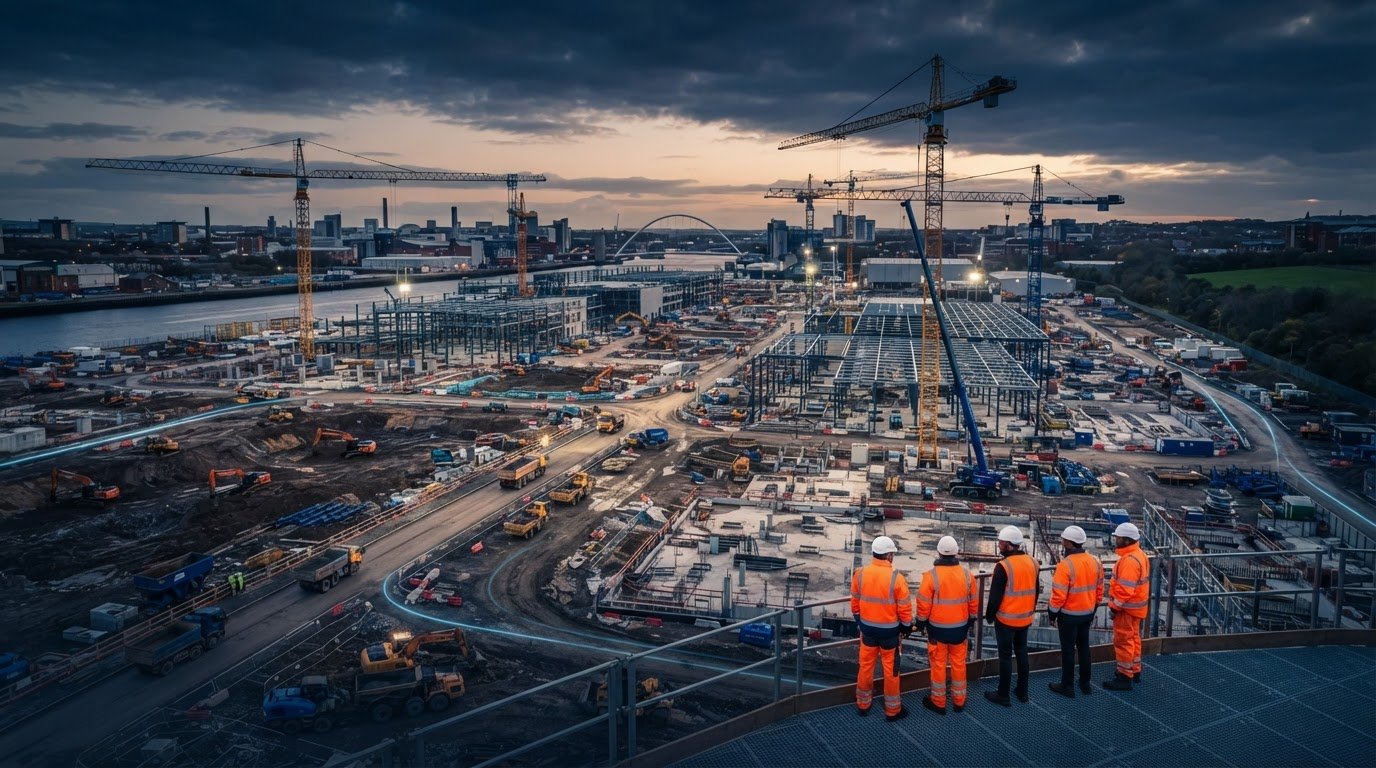
How do you show the true scale of a construction site without interrupting the work taking place on it? For teams considering drone videography for large scale construction projects north east, the answer starts before the drone takes flight: define what viewers need to understand, plan the filming around site operations and choose views that show the project clearly.
Aerial footage can look impressive, but it is most useful when it also makes site context and visible progress easier to communicate. Planning around access, active work and changing conditions keeps filming aligned with operational priorities. A clear brief gives the finished video a practical role in project updates or marketing.
This article explains how to plan drone footage for a major construction project, from choosing views and filming milestones to making the most of the final edit. Cornerstone Marketing Solutions provides drone videography, editing and post-production, with creative planning shaped around the project and its intended audience. The aim is footage that does more than capture the site: it helps people understand it.
Key Takeaways
- Use aerial views to help off-site audiences understand a construction site’s scale, layout and visible progress.
- Plan drone videography for large scale construction projects north east around project priorities, site access and intended use.
- Choose establishing shots, repeat progress views and edited sequences according to the story you need to communicate.
- Decide whether a one-off visit or planned repeat filming better suits your project timeline and reporting needs.
- A tailored visual brief guides filming, editing and post-production towards useful content for your intended audience.
Why drone videography helps explain large construction projects in the North East
A large construction site can change from week to week, while people who need to understand its progress may see it only through reports, meetings or occasional site visits. Ground-level photographs are useful for showing detail, but a series of close views can make it hard to see how different areas fit together or how the project is taking shape overall.
Construction drone videography is planned aerial filming that turns a project’s scale, context and visible progress into footage for clear communication. For drone videography for large scale construction projects north east, the value is not simply getting above the site. It is choosing views that help a particular audience understand what is happening.
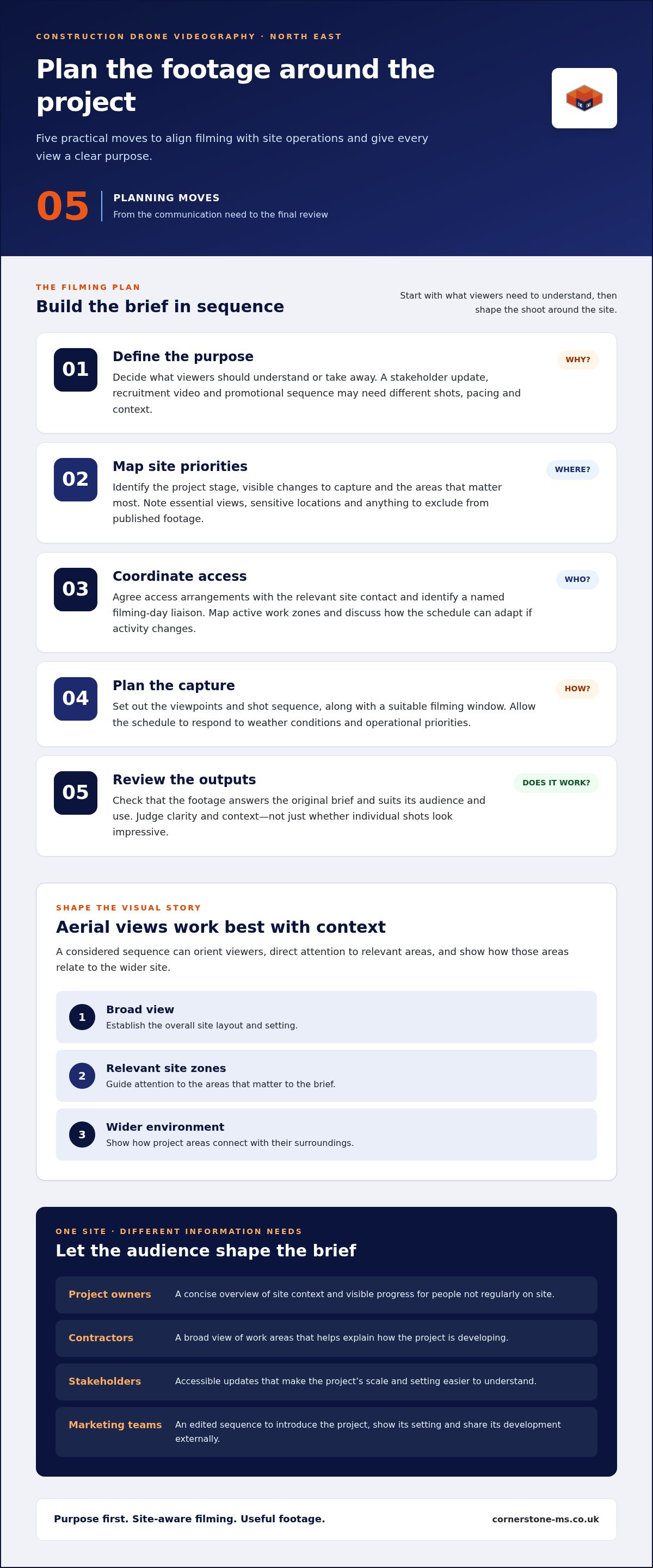
A considered sequence can orient viewers with a broad view, guide their attention to relevant site zones, then show how those areas relate to the surrounding environment. This gives the project story structure. An isolated aerial image or generic promotional clip may look striking, but without a clear purpose it can leave viewers unsure where to look or what has changed.
What can aerial footage show that ground-level filming cannot?
An elevated viewpoint can make the relationship between work areas, access routes, buildings and the wider site easier to follow. Ground-level filming can add detail, such as activity in a particular zone, while aerial views provide context to connect those moments. Used together, the two perspectives can give viewers a clearer picture than either may offer alone.
Hypothetical example: Imagine a large site where work is progressing in separate areas. A planned overview could establish the full layout, then show each zone in relation to the others. Filming later from comparable viewpoints could help viewers see visible changes across the site, rather than relying on memory or unrelated images.
These views can support progress communication, but they are visual records, not substitutes for formal project documentation, surveys or reporting. The wider applications of unmanned aerial vehicles include construction-related uses such as progress monitoring and site surveying. A video brief should still specify whether the footage is intended to tell a visual story, support updates or serve a promotional purpose.
Who benefits from construction project footage?
Different audiences need different information, so identify the intended viewer when preparing the filming brief:
- Project owners may need a concise overview of site context and visible progress to communicate with people who are not regularly on site.
- Contractors may value footage that gives a broad view of work areas and helps explain how the project is developing.
- Stakeholders may need accessible updates that make the scale and setting easier to understand without a site visit.
- Marketing teams may use an edited sequence to introduce the project, show its setting and share its development with an external audience.
These priorities affect what to capture, how to sequence the shots and what context to include in the edit. Agreeing on the audience and purpose early keeps the footage focused and makes it easier to use across project communications.
How to plan drone videography around a large construction site
Good planning makes filming easier to fit around site work and gives the finished footage a clear purpose. For teams commissioning drone videography for large scale construction projects north east, start with the communication need, then build the filming plan around the site and its operating priorities. Cornerstone tailors creative planning to the project brief and intended use.
- Define the purpose. Decide what viewers should understand or take away. A stakeholder update, recruitment video and promotional sequence may need different shots, pacing and context.
- Map site priorities. Identify the project stage, visible changes to capture and areas that matter most. Note essential views, sensitive locations and anything that should not appear in published footage.
- Coordinate access. Agree site access arrangements with the relevant site contact and identify a named liaison for filming day. Map active work zones and discuss how the schedule can adapt if site activity changes.
- Plan the capture. Set out the viewpoints and sequence needed to tell the story, along with a suitable filming window. Weather can affect which views are practical, so allow the schedule to respond to conditions and operational priorities.
- Review the outputs. Check that the footage answers the original brief and suits its intended audience and use. A useful review considers clarity and context, not just whether individual shots look impressive.
Build a filming brief around milestones and audiences
Before planning shots, record the current project stage, the visible changes worth showing and who will watch the final footage. Keep objectives distinct: stakeholders may need a clear progress update, while recruitment or promotion may call for a different emphasis. Agree on essential views and any areas to exclude from publication. This gives the creative plan practical boundaries and helps focus filming time.
Coordinate filming with site operations and safety
A named site liaison can help coordinate access, communicate relevant changes in work activity and clarify where filming should take place. Plan around busy operations rather than expecting the site to pause for a shot. The filming schedule should also account for suitable weather and access constraints. Before each operation, assess current CAA rules, airspace restrictions, permissions and site-specific requirements that apply. These can depend on the location and planned activity.
Keep the plan flexible. If a work area becomes unavailable or conditions change, an agreed priority list helps identify which views matter most and what can be rearranged. This supports a considered shoot without putting footage ahead of site operations.
Cornerstone provides project-based videography, including filming, editing and post-production for promotional use. A tailored brief connects site priorities to a coherent final edit and the channels where it may be shared. Learn more about construction drone videography as part of your visual communication planning.
Which drone footage and deliverables suit a large construction project?
The right output depends on what the footage needs to communicate and where it will be used. A project team may need a clear overview, a visual record of change or an edited film introducing the development to an external audience. For drone videography for large scale construction projects north east, choosing deliverables around these purposes keeps filming and editing focused.
Progress documentation records visible change over time; promotional storytelling shapes selected footage into a narrative for an audience. The two can overlap, but they are not interchangeable. A useful brief makes clear which role takes priority.
- Establishing shots: Best for showing the site’s overall scale, layout and relationship to its surroundings. Choose a viewpoint that gives viewers context and helps them orient themselves.
- Repeat progress views: Useful for making visible changes easier to follow across planned filming visits. Record viewpoints and framing so later footage can be compared meaningfully.
- Edited promotional sequence: Suited to introducing the project or sharing selected moments with an external audience. Set the intended audience, channel and key message before shaping the edit.
Choose views that communicate scale, context and progress
Wide establishing views are most helpful when viewers need to understand site geography: where the main areas sit in relation to each other, how the project meets its surroundings and what the overall footprint looks like. They provide a visual starting point before closer views draw attention to specific activity or milestones.
For repeat progress views, consistency matters. Using a planned viewpoint and similar framing can make changes more apparent from one visit to another. The footage can help people follow what is visibly developing, but it should not be presented as a survey, technical inspection or replacement for formal project records.
Match edited footage to where it will be used
A concise promotional edit can suit a website introduction or social post, where viewers may need the project’s defining context quickly. A broader project film can give more room to explain the development, its setting and selected stages for stakeholders or other audiences. Neither format is automatically better. The choice depends on the message and viewing context.
Plan for the destination before editing. Captions can clarify locations, stages or key messages, while branding can give the film a consistent identity. Framing and aspect ratio should also reflect where the video will appear, such as a website page or social media feed. If the film will sit within a wider website experience, web design in the North East can influence how visitors find and view that content. Cornerstone’s project-based videography includes filming, editing and post-production for promotional use, with creative choices tailored to the project brief and intended audience.
What to assess before commissioning construction drone videography
Before commissioning a shoot, assess what the footage needs to achieve, what the site can accommodate and how the finished material will be used. A defined brief helps Cornerstone tailor creative planning to your project, from filming priorities through to the final edit. For drone videography for large scale construction projects north east, use this checklist to align timing, access and deliverables.
Assess project timing, access and visual priorities
Start with the project calendar. Identify upcoming milestones, visually significant work and suitable filming windows. A one-off visit can capture a particular stage or moment. Planned repeat visits require more coordination, but can make visible change easier to follow when comparable views are captured over time. Choose the approach that fits your communications needs and project schedule.
Include practical site arrangements in the planning discussion. Cornerstone shapes the creative plan around the information you provide about access, restricted areas and operational coordination. A site contact can help communicate changes in work activity and clarify which views are priorities. Consider these questions:
- Objectives: What should the intended audience understand after viewing the footage?
- Timing: Which milestone or phase is visually important, and when can filming fit around planned work?
- Access: What access arrangements, restricted areas or site procedures should inform the filming plan?
- Conditions: Could weather or changing site activity affect the planned filming window or the views available?
- Operational checks: What current CAA rules, airspace restrictions, permissions and site-specific requirements need to be assessed for the planned operation?
Conditions may require adjustments. Building flexibility into the schedule and agreeing which views are essential helps keep the plan focused if work activity or weather changes. Applicable CAA requirements and airspace restrictions depend on the operation and location, so assess them for the specific shoot rather than making assumptions.
Plan for the footage to remain useful after filming
Decide who needs the footage and where it will appear. A stakeholder update, project webpage and social media post may each call for different edits, captions and framing. List the intended deliverables, the messages each should carry and any internal review or approval steps. This gives filming and post-production a shared direction and helps balance project accuracy with clear, accessible storytelling.
Think beyond the filming day, too. If the footage will support planned social content, align its format and messaging with the wider communications calendar. Cornerstone’s related article, “social media management in Teesside”, explores how social content fits into business communications. A clear brief can identify what needs context for viewers unfamiliar with the project, while keeping the final edit consistent with its purpose.
Once you’ve outlined objectives, timing, access and intended deliverables, plan your construction drone videography with Cornerstone around your project’s needs.
How Cornerstone can turn North East construction footage into a useful project story
Construction footage becomes more useful when it has a clear role beyond showing that a site is active. Cornerstone Marketing Solutions provides drone videography and project-based video production, including filming, editing and post-production for promotional use. A tailored visual brief connects the project’s priorities to the story the finished content needs to tell, so creative decisions support the intended audience rather than simply gathering attractive views.
From project brief to finished visual content
The work begins with your objectives: what the project needs to communicate, who needs to understand it and where the content may be used. Cornerstone uses that direction to shape the filming plan around the site, its defining features and the emphasis that matters to your audience. After filming, editing and post-production bring selected footage together into a coherent piece for promotional use.
This process keeps the story grounded in the project. A brief might prioritise the development’s overall setting for an external audience, or focus on selected visible stages for a project update. These call for different creative priorities, so the shots and edit should reflect the intended purpose. Deliverables can be tailored to the project brief rather than assuming every construction project needs the same format.
Cornerstone is based in Stockton-on-Tees and serves Tees Valley and the wider North East. That regional context helps frame work for local audiences and organisations, while each project’s location, stakeholders and communication needs guide the creative approach. Regional knowledge supports the conversation, but understanding the specific site and its story remains essential.
Connect project footage to the wider marketing plan
Approved footage may support a project webpage, social content or other promotional communications. The right channel depends on who needs to see the content and what they should take from it. A website edit may need enough context for someone encountering the project for the first time. Social content may call for a more focused message that fits the platform and sits naturally alongside other communications.
Planning these uses early helps the filming and edit work together. It also gives teams a chance to consider branding, captions and any internal review needed before publication. Cornerstone can align creative choices with the project’s wider visual communication plan, drawing on a branding strategy for North East businesses when a consistent identity is part of the brief.
If you’re planning drone videography for large scale construction projects north east, bring together your project priorities, intended audience and planned uses in a clear video brief. Discuss your North East construction video brief with Cornerstone Marketing Solutions to shape a considered approach to filming, editing and post-production.
Give your construction project a clear visual story
The value of drone footage depends on what it helps people understand and what they can do with that understanding. Before your next project milestone, decide which change or perspective would be most useful to communicate, then shape the filming brief around that purpose. This keeps the story relevant as work develops and gives the finished content a clearer place in your communications.
With drone videography for large scale construction projects north east, a considered approach can help turn a complex site into a story that stakeholders, clients and prospective audiences can follow. Start by connecting your project priorities with the people you need to reach.
Discuss your North East construction video project with Cornerstone and shape footage around your site, audience and communication goals. A clear brief is the foundation for content that represents your project with purpose.
Frequently Asked Questions
What can drone videography show on a large construction site?
Drone videography can give viewers an overview of a site that is difficult to understand through isolated ground-level images. A well-planned sequence might connect the site boundary, access routes and active zones, then show visible changes at a particular milestone. A brief for drone videography for large scale construction projects north east should identify which views will help its audience. Footage communicates visually; it does not prove build quality or replace surveys, engineering inspections or health-and-safety records.
Can drone filming take place while construction work is active?
Filming during active construction needs to be planned around site conditions and applicable requirements. Coordinate with the site team about access, work activity, restricted areas and a suitable filming window. A planned view may need adjusting if activity changes in that area. Weather, airspace and current rules also affect the plan, so filming should not be assumed possible in every condition or location.
How often should a construction project be filmed by drone?
There is no single filming frequency that suits every construction project. A short project with a few major visible milestones may call for a different cadence from a longer build with gradual changes. Start by listing the moments that matter to your communications, then consider how often access and site activity allow filming. If repeat visits are planned, consistent viewpoints and framing can make changes easier to compare.
Do I need permission to fly a drone over a construction site in the UK?
There is no one answer that applies to every site or flight. Requirements can depend on the operation, location, airspace, aircraft and current UK rules. Site access arrangements and relevant land or site permissions are separate considerations. Before filming, assess the project circumstances and check current Civil Aviation Authority guidance and applicable airspace restrictions. Do not assume that being on private land removes aviation requirements or location-specific restrictions.
What should a construction drone videography brief include?
A practical brief should state the project stage, what the filming needs to communicate and who will view the footage. Include priority areas or milestones, access arrangements, preferred timing, site constraints and intended uses, such as an internal update or public-facing promotion. Note who reviews the edit and what information needs approval before publication. This gives the creative team a clear basis for planning the content.
Can drone footage be used for construction progress reports?
Yes, a project team may use drone footage as a visual aid in progress communications when it suits the report’s purpose. For example, a sequence can help readers see how visible work has changed between selected stages. Present it accurately and alongside the project’s usual reporting materials. Video does not replace formal records, measurements, surveys or technical inspections, and it should not be used to imply evidence of compliance or construction quality.
What happens if weather or site activity disrupts a planned drone shoot?
Weather or changes on site can make the planned views impractical at the scheduled time. A useful plan identifies essential shots, flexible timing and alternative priorities, so the team can adapt the visual approach to current conditions. The site liaison can help communicate operational changes, while applicable rules and conditions still guide whether filming proceeds. Any adjustment should reflect the project brief and site priorities.