

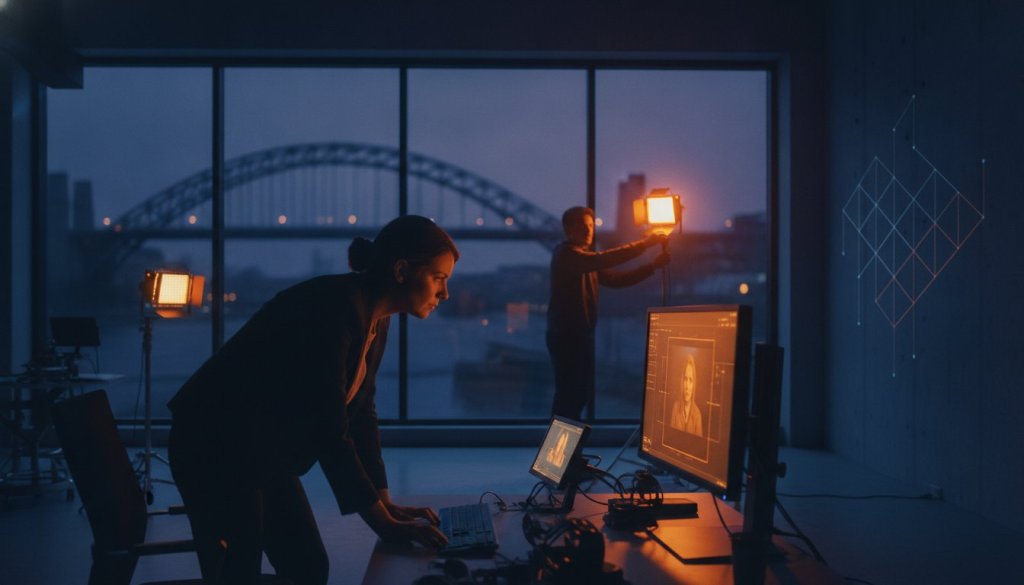
Most businesses assume a professional video requires a Hollywood-sized budget and the latest 8K camera, but the truth is that structural planning matters far more than the gear you use. You likely feel the pressure to compete in a market where the average person now watches nearly 100 minutes of online video every single day. At the same time, the fear of looking unprofessional or getting lost in technical jargon like frame rates and B-roll can be paralyzing. It’s a common hurdle when you are learning how to plan your first business video shoot for an established brand. We understand that this first step feels high-stakes, but success is found in a methodical approach rather than flashiness.
This guide provides a disciplined, actionable roadmap so you can move from a rough concept to a high-quality final product with total confidence. You’ll learn how to manage the logistical complexities of multi-location shoots and integrate your content into a wider marketing strategy that delivers a genuine return on investment. We’ll walk through the essential pre-production steps, regulatory requirements for North East filming, and the standards needed to ensure your brand’s message remains both secure and impactful. By focusing on foundational preparation, you can ensure your first production is a reliable asset for your business.
Key Takeaways
- Establish a singular objective and identify specific audience pain points to ensure your video serves as a functional tool for business growth.
- Discover how to plan your first business video shoot by utilizing storyboards and scripts that prioritize authentic, human-centric communication over technical jargon.
- Select filming locations that reinforce brand stability and conduct rigorous acoustic assessments to maintain professional standards throughout the production.
- Implement a methodical set-up routine for lighting and audio to create a controlled environment where talent can perform with quiet confidence.
- Master the transition from raw footage to a polished narrative by integrating consistent brand assets and selecting strategic distribution channels for maximum impact.
Defining Your Objectives: The Foundation of a Successful Shoot
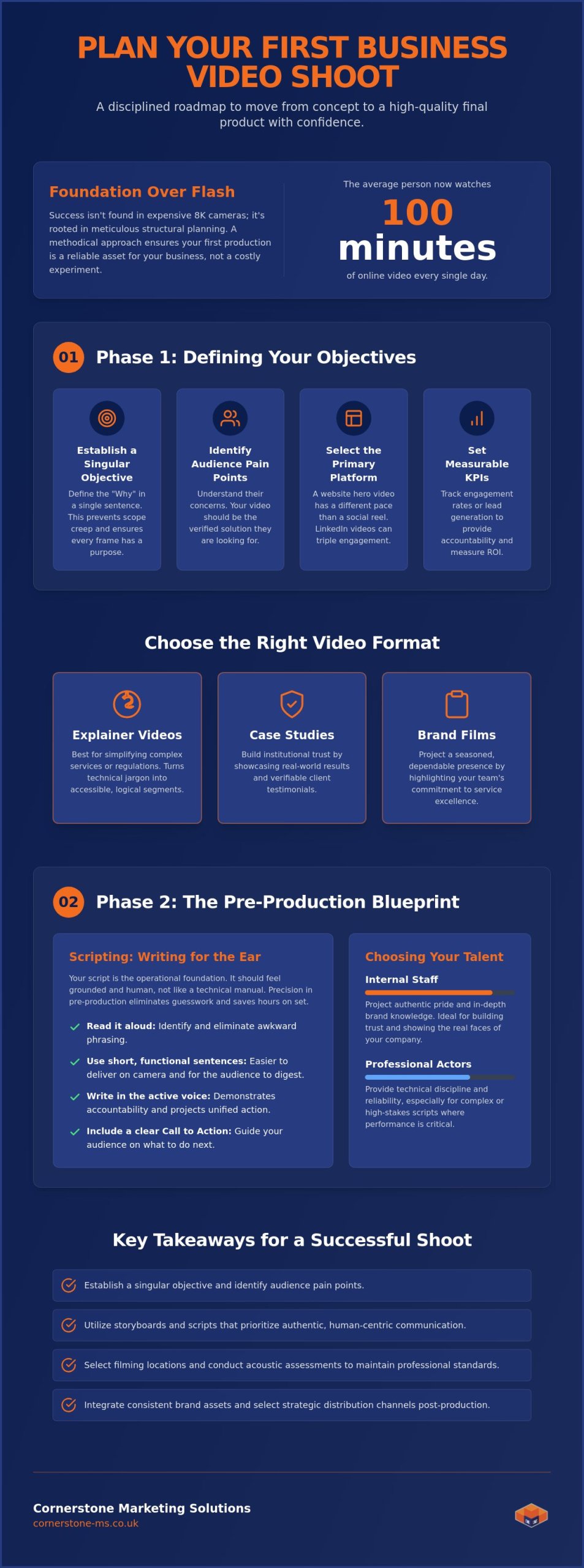
Before you pick up a camera or hire a professional crew, you must establish a clear foundation. Success isn’t found in expensive lenses; it’s found in the clarity of your intent. Understanding the process of producing video content begins with a single, focused objective. When you learn how to plan your first business video shoot, you’ll find that technical decisions flow naturally once you’ve anchored the project in a specific business need.
We recommend starting with a single sentence that defines the “Why” behind your project. For example: “This video will demonstrate our technical expertise to reduce client anxiety during the onboarding process.” This clarity prevents scope creep and ensures every frame serves a purposeful function. Once the objective is set, identify your target audience and their specific pain points. Are they confused by complex regulations, or do they worry about the reliability of their service providers? Your video should act as a verified solution to these concerns.
Selecting the primary platform is your next strategic move. A website hero video requires a different pace than a social media reel. With LinkedIn video posts now earning three times the engagement of text-only content, many B2B firms prioritize professional social feeds. However, a high-stakes infrastructure firm might benefit more from a steady, rhythmic website video that builds institutional trust. Set measurable KPIs early. Whether you’re tracking engagement rates or lead generation targets, these metrics provide the accountability required for a successful return on investment.
Choosing the Right Video Format
Establishing Your Creative Brief
A creative brief acts as the structural support for your entire project. It must document the tone, style, and key messaging requirements to ensure consistency across all channels. When learning how to plan your first business video shoot, setting a realistic timeframe for pre-production and the shoot day is essential for maintaining operational security. This brief should align seamlessly with your existing branding agency Newcastle strategy, ensuring that your visual content reinforces your established market position rather than contradicting it.
The Pre-Production Phase: Scripting and Storyboarding
Once your objectives are defined, you must translate those goals into a functional blueprint. Pre-production is the stage where you eliminate guesswork and build structural stability into your project. When you understand how to plan your first business video shoot, you realize that every minute spent in preparation saves hours of costly corrections on set. We approach this phase with technical precision, ensuring that your message remains clear and your production remains efficient.
A script serves as the operational foundation for your message. It shouldn’t mirror a dense technical manual or be filled with unnecessary corporate jargon. Instead, your words must feel grounded and human. We recommend reading your draft aloud to identify awkward phrasing. If a sentence feels difficult to say, it will likely feel difficult for your audience to hear. This is also the time to organize your talent. Choosing between internal staff and professional actors is a strategic decision. Internal staff often project a sense of authentic pride in workmanship, while professional actors provide the technical discipline needed for complex, high-stakes scripts.
Writing for the Ear, Not the Eye
Visual Planning with a Shot List
A storyboard allows you to visualize every shot before the camera rolls, acting as a technical guide for the entire crew. This process ensures that no essential footage is missed. Your planning must account for two distinct types of content: A-roll and B-roll. A-roll is your primary footage, such as an interview or a direct address. B-roll consists of supporting visuals that demonstrate your services in action, providing the thoroughness needed to maintain viewer engagement.
In 2026, technical logistics must also account for platform standards. Research indicates that 75% of video consumption now happens on mobile devices. This makes it essential to plan for different aspect ratios during pre-production. You might require 16:9 footage for your website and YouTube, but you also need 9:16 vertical versions for platforms like Instagram or LinkedIn. Planning these shots in advance ensures visual consistency with your brand’s color palette and style, regardless of where the end-user encounters your content.
Scouting Locations and Technical Logistics in the North East
Selecting a location is an exercise in risk management and brand alignment. When you’re determining how to plan your first business video shoot, the physical space you choose acts as a silent partner in your narrative. It must reflect your brand’s stability and professional standards. A cluttered or noisy environment can undermine even the most disciplined script. We recommend conducting a site visit at the exact time of day you intend to film. This allows you to evaluate the acoustic environment and identify disruptive background noise, such as traffic or industrial machinery, before it impacts your production schedule.
Logistics in the North East require specific attention to detail. In areas like Teesside, you must verify parking availability for crew vehicles and ensure reliable power access for lighting rigs. If you are filming in public spaces, regulatory adherence is non-negotiable. For instance, filming in Newcastle requires a permit for larger productions or drone use. This currently carries a fee of £69 plus VAT and requires a minimum of two weeks’ notice. Sunderland and Northumberland have also adopted Filming Friendly protocols, but you still need formal agreements for council-owned land. Managing these permissions early ensures your shoot proceeds without legal interruptions.
Lighting is another critical technical factor. While natural light can appear authentic, it lacks the predictability required for long production days. Professional studio setups allow for seamless integration between shots, ensuring that the visual quality remains consistent from the first take to the last. This level of control is essential for building institutional trust through high-quality visual standards. Successfully learning how to plan your first business video shoot requires this thorough assessment of the physical environment to prevent technical failures on the day.
Scouting Local Sites Across the North East
The North East offers a diverse range of industrial and corporate backdrops. Whether you are looking for the modern skyline of Newcastle or the industrial heritage of Stockton and Middlesbrough, your choice must match the technical precision of your service offering. We ensure every site meets strict safety standards and regulatory requirements. A well-chosen site doesn’t just look professional; it demonstrates a commitment to the community and the infrastructure that supports your operations.
The Role of Drone Videography
Integrating aerial footage provides a unique perspective on large-scale infrastructure and regional projects. We utilize drone videography to highlight the scale of business operations in a way that ground-level cameras cannot. However, this requires strict adherence to CAA regulations and safety requirements for UK drone flights. By following these rigorous standards, we can capture high-impact visuals that reinforce your brand’s presence as an essential foundation for client operations.
Managing the Shoot Day: On-Set Direction and Efficiency
Execution day is the culmination of your pre-production efforts. Arriving early is a mark of professional accountability. It allows for the seamless integration of equipment and thorough testing of environments before the first frame is captured. When you master how to plan your first business video shoot, you understand that the first hour on set dictates the efficiency of the entire day. We prioritize setting up lighting and testing audio quality well before the talent arrives to maintain a calm, disciplined atmosphere. This preparation ensures that when the camera rolls, the focus remains entirely on the message.
Nervousness is natural for staff members who aren’t professional actors. We recommend directing with quiet confidence to ensure a relaxed, authentic performance. Instead of demanding perfection, encourage a grounded conversation that reflects your brand’s human-centric approach. A disciplined director remains a steady presence, providing guidance that allows the subject’s expertise to shine through. Monitor every take for messaging accuracy, but allow enough room for creative spontaneity that might capture a more relatable moment. This balance ensures the final product feels both technically precise and genuinely relatable, which is a core part of learning how to plan your first business video shoot effectively.
Sticking to a methodical schedule is essential for operational security, yet you must remain flexible enough to handle minor logistical shifts. We use a unified team approach to monitor technical precision, checking everything from frame composition to the clarity of the spoken word. Our team provides the technical discipline required for high-stakes productions; explore our videography services to see how we manage professional shoots with care and precision.
Essential Audio and Lighting Standards
High-quality audio is often more important than 4K visuals for building institutional trust. If the sound is distorted or muffled, viewers will instinctively question the reliability of the message. We utilize three-point lighting—key, fill, and backlighting—to create a polished, three-dimensional look that highlights the subject without harsh shadows. Methodical placement of lapel or boom microphones, combined with a quick assessment of the room’s acoustics, helps reduce echo and ambient noise. This ensures your core message of security and efficiency is never obscured by technical failure.
Capturing High-Value B-Roll
Capturing high-value B-roll provides the flexibility needed during the final post-production phase. We focus on specific details that highlight your team’s workmanship and attention to detail, such as hands-on technical tasks or collaborative meetings. Filming “behind the scenes” content shows the human side of your brand, reinforcing the sense of care woven into your services. You must ensure you have enough cutaway shots to hide necessary edits in the main interview. This technique maintains a steady, rhythmic narrative flow that keeps the end-user engaged from start to finish.
Post-Production and Strategic Content Distribution
The final phase of the production process is where your raw footage transforms into a polished, foundational asset. Post-production is a disciplined exercise in refinement. We select the best takes to create a methodical, purposeful narrative that aligns with the objectives you established in the first phase. When you understand how to plan your first business video shoot, you recognize that editing is not merely about removing mistakes. It is about distilling your message into its most effective form through technical precision and careful storytelling.
During this stage, we integrate essential brand assets such as logos and lower-thirds to ensure visual continuity across all channels. Professional color grading is applied to provide a consistent, high-quality look that reflects your brand’s stability. Once the edit is finalized, you must optimize the video for various platforms. Given that 75% of video consumption now occurs on mobile devices, providing vertical versions for social media is a technical requirement rather than an option. Finally, we measure performance against your initial KPIs. Whether your goal was a specific engagement rate or a lead generation target, this data provides the transparency needed to justify your investment and prove a return on workmanship.
Editing for Clarity and Impact
A successful edit maintains a steady, rhythmic pace to keep the viewer engaged without causing fatigue. We prioritize accessibility by using captions and subtitles. This is essential for silent social media viewing, as many users consume content in public environments where audio is unavailable. To reinforce institutional trust, we integrate third-party validations or industry awards within the visual narrative. This serves as a constant shorthand for your commitment to excellence and your role as a reliable partner in a demanding industry.
Integrating Video into Your Marketing Strategy
The value of your video extends far beyond a single upload. Embedding your content can significantly improve your web design North East performance by providing a more interactive and informative user experience. High-quality video keeps visitors on your site longer, which is a verified method for enhancing your local SEO services through increased dwell time.
Beyond your website, video snippets are a powerful tool for your social media management Teesside campaigns. Research shows that LinkedIn video posts earn three times the engagement of text-only content, making them an essential component of any B2B strategy. By repurposing your main video into shorter, platform-specific clips, you maximize the visibility of your brand across the entire digital landscape. This integrated approach ensures that knowing how to plan your first business video shoot leads to a long-term foundation for your business growth.
Establishing a Lasting Visual Foundation
Visual communication is more than a marketing trend; it’s an essential infrastructure for modern client engagement. By prioritizing objective-led scripting and methodical site logistics, you ensure that every frame serves a purposeful function for your brand. We’ve explored how a disciplined approach to both the shoot day and post-production transforms a simple concept into a verified business solution. Mastering how to plan your first business video shoot allows you to project the quiet confidence and reliability that your audience expects from a seasoned partner.
Success in this demanding industry requires a collaborator who values technical precision and long-term collaboration. The award-winning Cornerstone Marketing Solutions provides the high-end equipment and specialized drone videography needed to highlight your business’s scale within the North East. We deliver tailored marketing strategies that integrate professional video into a broader mission of community impact and growth. Book a professional videography consultation with Cornerstone Marketing Solutions to begin building your digital foundation. Your first production is the start of a powerful narrative that will serve your clients for years to come.
Frequently Asked Questions
How much does a professional business video shoot cost?
The cost of a professional production is determined by the scale of the project, the technical requirements of the equipment, and the size of the crew involved. Factors such as the number of filming locations across the North East and the complexity of post-production tasks like color grading or sound design will influence the total investment. We focus on providing a thorough assessment of your specific needs to ensure every pound spent contributes directly to a high-quality final product.
Do I need to hire professional actors for my first video?
You don’t always need professional actors to create an impactful message. Internal staff members often project a sense of authentic pride in their workmanship that resonates deeply with clients. However, if your script requires a specific technical delivery or if you’re managing a high-stakes brand film, professional talent can provide the discipline needed to maintain a methodical production schedule. We help you evaluate which approach best serves your brand’s human-centric goals.
How long should a typical business promotional video be?
The ideal duration depends entirely on the platform and the specific objective of the content. For social media platforms like LinkedIn or Instagram, a concise 30 to 60-second clip is often most effective for maintaining engagement. For a more detailed brand overview or an explainer video on your website, a length of two to three minutes allows for a logical, rhythmic progression of information. We ensure the pace remains steady to keep the end-user focused on your core message.
Can I use my own office as a filming location?
Your own office is often an excellent location because it reflects the actual environment where your services are delivered. When considering how to plan your first business video shoot, you must assess whether the space projects the stability and professionalism of your brand. You should conduct a rigorous check of the acoustic environment to ensure background noise from office equipment or air conditioning won’t disrupt the recording. We prioritize these technical checks to maintain operational security on set.
What is the difference between A-roll and B-roll in video production?
A-roll is the primary footage that carries the narrative, such as an interview or a direct address to the camera. B-roll consists of the supplemental visuals that are cut into the A-roll to provide context and visual interest. Using B-roll is a disciplined way to demonstrate your team in action, highlighting the attention to detail that defines your service. It also provides the flexibility needed in post-production to create a seamless, professional edit.
How do I ensure my video matches my existing brand identity?
Maintaining brand consistency requires a methodical approach to visual and tonal elements. You should utilize your established color palette, fonts, and logos during the post-production phase to ensure the video feels like a natural extension of your website. Aligning the script with your existing branding strategy prevents any confusion for the end-user. We focus on these details to build long-term institutional trust through a unified brand presence.
What are the essential pieces of equipment for a beginner shoot?
The foundations of a professional shoot include a high-quality camera capable of 4K resolution, a stable tripod, and an external microphone. While modern devices are technically proficient, the quality of your audio and lighting is often more important for building trust than the camera itself. A basic three-point lighting kit and a lapel microphone are essential for ensuring your subject looks and sounds professional. We use these tools to create a controlled environment that minimizes technical risk.
How long does the post-production and editing process usually take?
The editing process is typically more time-intensive than the shoot day itself. For a standard two-minute corporate film, you should allow several days for the initial edit, sound mixing, and the integration of brand assets. This timeframe ensures that the final narrative is purposeful and that every technical requirement is met with precision. Learning how to plan your first business video shoot involves accounting for this thorough post-production phase to ensure a high-quality result that delivers a genuine return on investment.