


A renewable energy business can deliver complex, valuable work and still struggle to explain why it matters to local customers. That is the challenge digital marketing for renewable energy firms teesside needs to address: making technical services clear, relevant and credible.
If your marketing feels disconnected across your website, search results and social channels, prospective customers may struggle to find consistent answers. They need straightforward explanations, while businesses across Teesside and the wider North East need a presence built on clear evidence, not unsupported environmental claims. Effective marketing connects these needs and helps the right audiences understand what you do.
This article explores how to turn specialist knowledge into accessible content, improve local visibility and communicate with care. It covers mobile-friendly websites, search engine optimisation, social media and visual content, as well as ways to keep activity aligned and review its performance. The aim is a digital presence that reflects your work clearly and earns trust over time.
Key Takeaways
- Shape messages around the different questions homeowners, landlords and commercial decision-makers bring to renewable energy research.
- Explain technical topics such as solar PV, heat pumps and battery storage in clear content that guides readers towards a useful next step.
- Choose website, social media, video and graphic design formats according to your audience and marketing objectives.
- Build digital marketing for renewable energy firms teesside around defined audiences, measurable objectives and a baseline for reviewing performance.
- Use locally relevant web, social media and visual content to create a more consistent digital presence across Tees Valley and the wider North East.
Why renewable energy firms in Teesside need a clear digital marketing foundation
Renewable energy services involve technical choices, but prospective customers need straightforward information to understand a service, assess whether it may suit them and decide what to do next. A website or social post that relies on unexplained terminology can leave people unsure what a service involves or whether it fits their needs. Sector-focused digital marketing is clear, accurate communication shaped around the questions and priorities of a defined audience.
The foundation matters because different customers research in different ways. A homeowner may be exploring solar PV for a property, while a landlord could be considering how a measure relates to a rental building. Commercial and organisational decision-makers may need information relevant to a particular site, operational requirements or an internal business case. One generic message is unlikely to answer all those questions well.
Teesside and the wider North East provide a useful context for local communications, but local references are not proof of customer demand. For example, Teesside Wind Farm is a renewable energy project associated with the area. Referencing local places or projects can make a topic more tangible, but should not imply that a firm is involved or that a particular service will deliver a specific result.
What makes renewable energy marketing different?
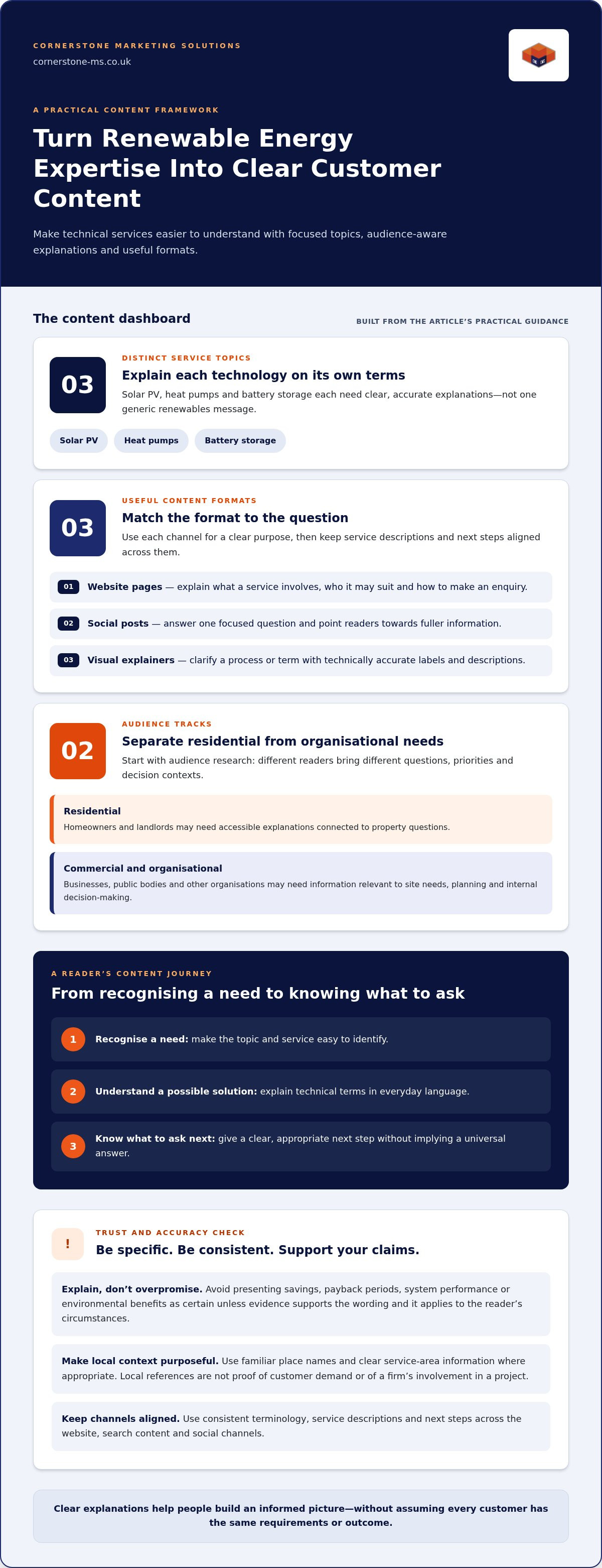
Solar PV, heat pumps and battery storage each call for distinct customer education. Content about solar PV might explain the system’s role in a property. A heat pump page can describe the service in plain language, while information about battery storage should clarify what the technology is intended to do. Translate technical detail into accurate, useful explanations instead of relying on jargon or broad promises.
These are considered decisions, so consistent information across a website, search content and social channels helps people build an informed picture. Keep terminology, service descriptions and next steps aligned. This consistency supports trust without suggesting every customer has the same requirements or will get the same outcome.
Which Teesside audiences should the strategy serve?
Separate residential audiences from commercial and organisational ones before choosing messages. Homeowners and landlords may need accessible explanations tied to property questions. Businesses, public bodies and other organisations may need content that speaks to site needs, planning and internal decision-making. These are useful starting points for audience research, not assumptions about what every person or organisation values.
Local relevance comes from practical choices: use familiar place names where appropriate, write in clear language and make service-area information easy to understand. A Stockton-on-Tees business communicating across Tees Valley and the wider North East, for instance, can organise its location information so readers can quickly see which communities its messaging addresses. Keep local detail accurate and purposeful rather than adding place names as keywords.
Distinguish customer education from promotional claims. Explain what a technology is, which questions a prospective customer may want answered and what the next step involves. Avoid presenting savings, system performance or environmental benefits as guaranteed unless specific evidence supports the wording. For digital marketing for renewable energy firms teesside, a clear audience focus and careful claims create a dependable foundation for the channels and content that follow.
How Teesside renewable energy marketing turns technical services into useful content
Useful content does more than describe equipment. It helps a reader move from recognising a need to understanding a possible solution, then shows them an appropriate next step. Make that journey clear whether someone is comparing services, learning basic terminology or preparing to make an enquiry.
Accurate, useful content gives customers the clarity to assess a technical service and decide what questions to ask next. For renewable energy firms, that means drawing on real project knowledge and checking that each explanation reflects the service being discussed. Avoid presenting savings, payback periods or system performance as certain unless the claim is supported by evidence and applies to the reader’s circumstances.
Build content around customer questions
Group questions by service, audience and decision stage. A homeowner exploring solar PV may need a clear overview, while a commercial decision-maker may want information framed around their site and organisation. Questions about heat pumps or battery storage deserve their own explanations rather than being squeezed into a general renewables page.
Turn recurring questions into a practical content set:
- Website pages can explain what a service involves, who it may suit and how to make an enquiry.
- Social posts can answer one focused question at a time and direct readers to fuller information.
- Visual explainers can clarify a process or term, provided labels and descriptions remain technically accurate.
Use precise terms where they matter, then explain them in everyday language. If a detail depends on the property, site or project, say so plainly instead of implying a universal answer. This approach helps readers understand the essentials without overwhelming them with specifications they may not yet need.
Make local relevance useful, not repetitive
Teesside references should help people understand the subject or recognise the audience being addressed. A local example can provide context, but repeating place names in every heading will not make an explanation clearer. Keep service-area wording consistent across the website and social content, and make every location reference accurate and relevant.
For guidance on how location information supports discoverability, explore Cornerstone’s local SEO services page. The same principle applies to content planning: connect a local search or question with a useful answer instead of adding place names without substance.
In practice, digital marketing for renewable energy firms teesside can turn one well-informed answer into coordinated assets: a detailed website explanation, a concise social post and a clear visual summary. Each should use the same core facts and direct readers towards an appropriate next step. Website and content marketing support can help bring those elements together.
Which digital marketing channels suit renewable energy firms in Teesside?
Each digital channel has a different role. A website provides detailed service information, social media keeps useful answers visible, video shows people and processes, and graphic design makes information easier to scan. The right mix depends on how your intended customers research and what your business wants its marketing to achieve.
Give each channel a defined purpose, then review evidence related to that purpose. No single channel guarantees rankings, enquiries or sales. The table below provides a practical starting point for planning and evaluation.
| Channel | Best-fit role | Suitable content | Sensible review signal |
|---|---|---|---|
| Website | Provide a dependable information point | Service pages, FAQs and clear enquiry routes | Relevant page visits and enquiry activity |
| Social media | Share concise updates and answer common questions | Educational posts, short explanations and project updates | Meaningful engagement and visits to related pages |
| Video | Make people, processes or places easier to understand | Professional 4K footage and high-definition images | Views, completion patterns and onward visits |
| Graphic design | Clarify information and create visual consistency | Diagrams, branded explainers and social graphics | Audience response and use across planned channels |
Use the website as the central information point
Clear service pages give visitors room to understand what a business does, find relevant details and see how to make an enquiry. Organise pages around distinct services and customer needs instead of relying on one broad description. Mobile-friendly design also matters: people may research on different devices, so content and navigation should remain usable on smaller screens. For wider planning considerations, see the Web Design North East guide.
Use social media and video to make expertise visible
Social posts can answer one genuine customer question at a time, explain a term or direct readers to fuller website information. Keep claims measured and aligned with the facts behind the service. A regular, coherent approach is more useful than publishing without a clear audience or purpose. The Social Media Management Teesside guide offers further channel-planning context.
Video and photography can show people, processes or places in a direct, visual way. Professional 4K video footage and high-definition images give a business material to use across relevant digital channels. Graphic design can present key information in a consistent format. Choose the format according to the message, not simply because a channel is available.
For digital marketing for renewable energy firms teesside, connect each channel to a specific audience need and objective, then review whether it helps people find, understand or act on useful information. Explore Cornerstone’s digital marketing support for a joined-up approach to web design, social media, video and graphic content.
A practical digital marketing plan for renewable energy firms across Teesside
A useful plan gives each marketing activity a purpose and a way to assess whether it is helping. For digital marketing for renewable energy firms teesside, a simple sequence keeps decisions grounded in audience needs, business priorities and evidence rather than assumptions.
- Define audiences. Decide which groups the plan should serve, such as homeowners, landlords or commercial and organisational decision-makers. Note what each audience needs to understand and which questions may shape its research.
- Set objectives. Choose a small number of priorities, such as improving awareness of a service, helping visitors engage with useful information or making the enquiry route clearer.
- Prioritise messages. Select the services and customer questions that matter most. Use accurate explanations and evidence, and avoid claims about savings, performance or environmental impact that cannot be substantiated.
- Choose channels. Match the message to the format and audience. A detailed website page, social post, graphic explainer or video can each support a different part of the customer journey.
- Review evidence. Compare activity with the objectives, identify what appears useful and decide what to refine. Treat findings as a guide for future decisions, not a promise of growth.
Before changing campaigns or publishing new content, establish a baseline. Record the current pattern for relevant website traffic, social engagement and enquiries, using the same definitions and reporting periods when reviewing progress. Without that starting point, a change in activity can be difficult to interpret. A rise in page visits, for example, is an activity signal. It does not by itself show that the right people found the information useful or went on to enquire.
Set priorities and meaningful measures
Choose indicators that reflect the objective. If the aim is awareness, review measures such as visits to relevant service pages or the reach of educational posts. If the aim is engagement, look at meaningful interactions and visits to related information. For an enquiry pathway, monitor enquiry activity alongside the steps that lead to it. Report these measures in plain language, separating what the team did from the business outcomes observed.
Look for patterns over time rather than drawing conclusions from one isolated result. Explain what changed, what evidence supports the interpretation and what you will adjust next. This keeps reporting useful without implying that any channel or activity guarantees more enquiries.
Create a consistent publishing workflow
Plan topics around customer questions, service priorities and the knowledge available within the business. A core subject can become a detailed website page, a short social update, a graphic and a video, with each format preserving the same central facts. Use a simple review process to keep technical details and claims accurate as services, supporting evidence and customer questions evolve.
Consistent visual communication helps audiences recognise and understand content across channels. The North East branding guide provides context for developing a coherent identity. A structured digital marketing plan can bring these priorities into practice.
How Cornerstone Marketing Solutions can support renewable energy firms in Teesside
Renewable energy businesses need digital communications that make specialist services easier to understand and present consistent information wherever prospective customers encounter the business. Cornerstone Marketing Solutions is based in Stockton-on-Tees and serves businesses across Tees Valley and the wider North East. Its services include website design, social media management, graphic design and video content, which can be brought together around a business’s marketing priorities.
Cornerstone is a reliable, innovative agency with in-house content creation. This gives businesses a practical foundation for planning content across channels, from a clear service page to supporting social and visual material. The focus is on communicating your work accurately and accessibly, without relying on unsupported claims or suggesting that every customer has the same needs.
Bring web, social and visual content together
A well-structured website can give visitors a fuller explanation of a service, while social content can introduce useful questions and guide people towards relevant information. Clear, mobile-friendly website design helps keep key details accessible across devices. The channels work best when they use consistent language and direct readers to information that answers their next question.
Graphic design can give explanations a coherent presentation across web pages and social posts. Professional 4K video footage and high-definition images can show people, processes or places in a direct visual format. Used together, these assets help renewable energy firms explain what they do while keeping service descriptions and visual communication aligned.
For example, a business could build its communication around a service page, then develop supporting social content and a graphic highlighting the main points. Video or photography can add a visual view of the people or processes behind the work. The subject matter and claims should come from the business’s own knowledge and evidence, keeping the finished content accurate and relevant.
Take the next step with a locally based team
Working with a Stockton-on-Tees-based agency gives businesses across Tees Valley and the wider North East a local point of reference for marketing discussions. Start by outlining your intended audience, the services you want to explain and the priorities your digital presence needs to support. These details can help shape an approach to your website, social media and visual content.
Cornerstone can bring those elements into a clear, connected digital presence. If you’re considering digital marketing for renewable energy firms teesside, set out your goals and priorities to shape a tailored way forward. Get noticed online with Cornerstone.
Make your next marketing step a clear one
Progress starts with a focused decision, not a larger volume of content. Choose one priority for the next stage of your marketing, such as making a key service easier to understand or helping a particular audience find relevant information. Then decide how you will recognise whether your communication is doing its job. This gives your team a practical point to build from and a reason to review what comes next.
For digital marketing for renewable energy firms teesside, keep clarity and credibility at the centre of that work. A steady, locally relevant presence can help people understand your services and make informed decisions, provided every message stays accurate and consistent. Treat your digital presence as an ongoing business asset: maintain what works, refine what does not and keep customer questions in view as your priorities evolve.
Cornerstone Marketing Solutions can help shape a coordinated digital presence around your firm’s goals. Get noticed online with Cornerstone Marketing Solutions and take the next step towards clear, considered communication.
Frequently Asked Questions
How can digital marketing help a renewable energy company in Teesside?
Digital marketing can help a renewable energy company explain its services clearly and make relevant information easier to find. A page answering common questions about a service can support someone early in their research, while a social post can point them towards more detail. A considered approach to digital marketing for renewable energy firms teesside connects these touchpoints and gives interested readers an appropriate next step, without promising leads or sales.
Which digital marketing channels are useful for renewable energy firms?
A website holds detailed information and gives visitors a route to learn more. Social media supports regular, concise updates; video can show people or processes, while graphic design can make key information easier to scan. A firm might use a website page for a full service explanation and social posts to introduce related questions. Which channels deserve priority depends on the audience’s habits and the business’s objectives.
How should a renewable energy business explain technical services online?
Use plain language, define necessary technical terms and make each page relevant to a specific audience or service. A page for a commercial audience, for example, may need different context from one written for householders. Make factual statements precise and support claims with suitable evidence. Avoid presenting savings, payback periods or performance as assured outcomes when they depend on circumstances or lack substantiation.
How can a renewable energy firm reach customers in Teesside online?
Make regional service information easy to understand and keep place references consistent across your website and social profiles. Useful content can address questions relevant to the communities and audiences your business serves, rather than adding location names without context. Describe the areas covered in clear language on a service page and use the same regional wording in social posts. Local references help orient readers, but do not guarantee visibility.
How can a renewable energy company measure digital marketing performance?
Start by linking each measure to a clear objective. Page visits or post interactions can show activity, while enquiry records indicate a business outcome. Neither tells the whole story alone: consider whether the right audience engaged and what action followed. Establish a baseline, use consistent reporting periods and review patterns over time. Describe what the evidence shows without treating a change as proof of guaranteed future results.
Can social media help renewable energy businesses build trust?
Social media can support trust when a business shares useful, consistent information and responds to genuine customer questions with care. A post might clarify a service term or direct readers to fuller details on the company website. Keep descriptions accurate and avoid overstating environmental benefits or likely results. Posting alone cannot guarantee trust or enquiries, so make each update part of a wider, dependable communication approach.
Why does a renewable energy business need a mobile-friendly website?
A mobile-friendly website helps people access service information on a phone or tablet as well as a desktop. Clear menus, readable page content and visible routes to relevant details make it easier for visitors to find what they need. Check key pages on different screen sizes, including service explanations and contact pathways. This supports a more accessible experience, but does not guarantee that visitors will enquire.